For the wider choice, the four-waterfall comparison places both Düden sites alongside Kurşunlu and Manavgat, with time allowances and routes that keep each outing in one part of the region.
Upper or Lower Düden: which one to choose
The two sites offer different experiences, and arriving at the wrong one is the most common planning mistake. Upper Düden is landscaped and developed, with cafes, souvenir stalls and paved paths; expect a municipal recreation park rather than a wilderness trail. Its distinctive feature is Dilek Mağarası, the natural travertine and limestone cave reached by stairs behind the falling water. Openings in the rock let you look out through the spray.
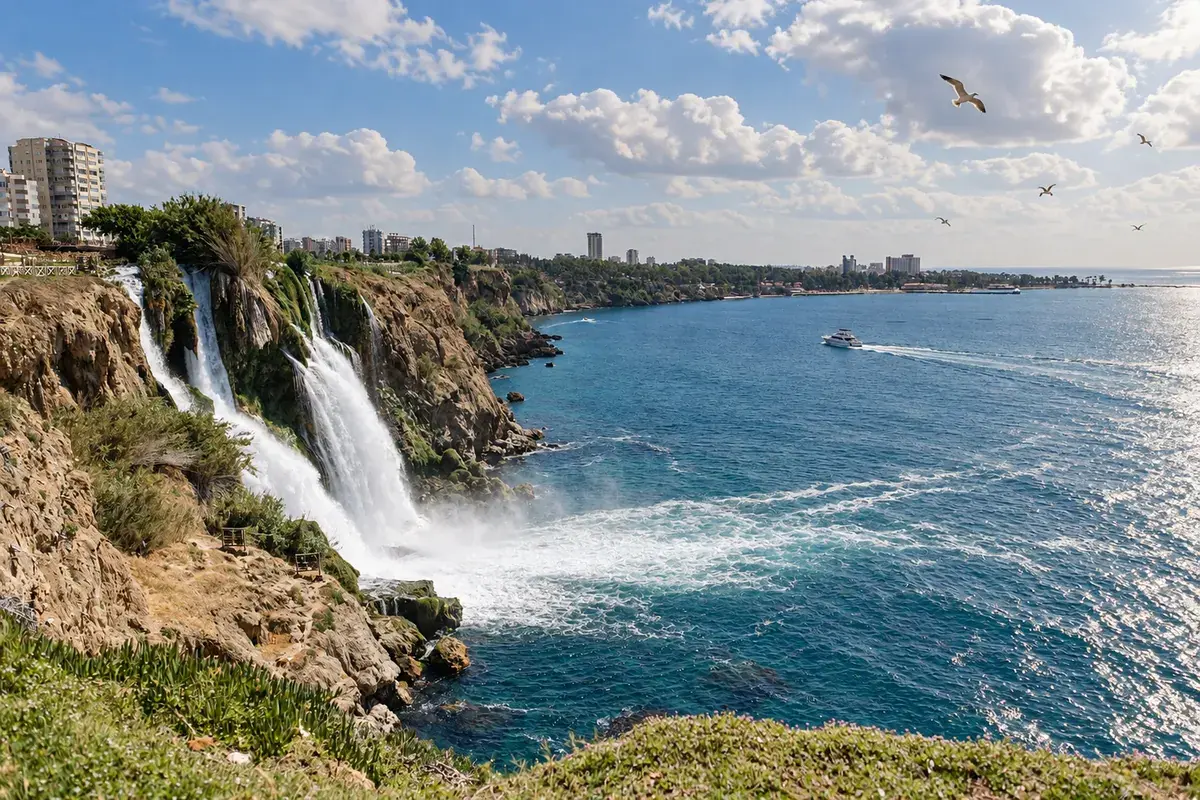
Lower Düden needs no hiking and has no cave route. You walk through a municipal clifftop park to viewing terraces above the Mediterranean. The land view is free and worthwhile, although a boat gives a more frontal view of the entire cliff and falling water. There is no visitor path down the cliff to the waterfall’s base.
| Upper Düden / Düdenbaşı | Lower Düden / Karpuzkaldıran | |
|---|---|---|
| Setting | Wooded recreation park in Kepez | Public coastal park in Muratpaşa, Lara |
| Main reason to go | Walk behind the water through Dilek Mağarası | Watch the river plunge directly into the sea |
| Physical effort | Short walks plus steep, narrow cave stairs | Mostly level paths to the main viewpoints |
| Time on site | Allow 1.5–2 hours; longer for a picnic | Allow 30–60 minutes from land |
| Best for | Families, a shaded break and an unusual cave perspective | A quick coastal stop, sunset and sea views |
| Less suitable for | Visitors who dislike steps, crowds or commercial recreation parks | Visitors expecting an inland gorge or a long nature walk |
If you have only one free hour in Lara, go to Lower Düden. If you are choosing just one full excursion and want something more than a viewpoint, Upper Düden has more to do. Travelers seeking a longer forest trail and a chain of small pools may prefer Kurşunlu Waterfall Nature Park, which is a separate paid nature park outside the city.
For a day of free walks and viewpoints in Antalya, pair Lower Düden’s cliff path with the old-town terraces and budget separately for the city bus.
Tickets, payment and opening hours
| Site | Admission | Opening hours | How to enter |
|---|---|---|---|
| Upper Düden | ≈ $4 (₺200) per international adult visitor, at the gate tariff | Daily, April–October 08:00–19:00; November–March 08:00–18:00 | Ticket gate or Antalyakart at the turnstile |
| Lower Düden | Free | Public park with no waterfall ticket office or turnstiles | Walk into Düden Park and follow the cliffside paths |
Upper Düden is municipally operated, so Museum Pass and Müzekart do not provide entry or a discount. The Ministry of Culture and Tourism’s Museum Pass information covers participating ministry museums and archaeological sites only.
International visitors can pay the Upper Düden admission with Antalyakart. The card functions as a payment method here and gives no special resident discount: load enough balance for the waterfall charge as well as any bus or tram journeys. Turnstiles were installed for this system under an arrangement involving Antalya Ulaşım and ANSET, according to the Antalya Ulaşım Antalyakart announcement. Buying an ordinary gate ticket remains the straightforward option if you do not already have a card.
There is no advantage in buying a standard Upper Düden ticket weeks ahead for an ordinary independent visit. Arriving early matters more during busy periods. The ANSET Düden visitor page is the municipal operator’s official reference for the Upper site and for tariff or access questions. At Lower Düden, anyone selling waterfall admission at the public park should not be confused with an official ticket booth, because there is none.
When a boat or package tour makes sense
Boat trips to Lower Düden normally leave from Kaleiçi Old Harbor. They are optional round-trip sightseeing cruises; they do not connect the two waterfall sites or drop passengers at Upper Düden. Before paying, confirm that the route reaches Karpuzkaldıran, how long the boat stays near the falls and whether Upper Düden admission is included in a package. Shorter harbor cruises may not go that far.
We would pay for the boat only if the frontal sea view is a priority; the free park is enough for a first visit on a tight budget. For a full-day package, compare the itinerary rather than the headline inclusions. Some combine Upper Düden, a boat cruise and other city stops, leaving limited time in the cave park. Hotel pickup is useful for families, while independent travelers staying in Lara can see Lower Düden without any tour.
Morning boat departures can be more comfortable when afternoon wind and chop increase, but sea conditions are never guaranteed. If you are prone to motion sickness, ask about the vessel size and route before paying, and do not assume that every ticket sold as a “Düden tour” includes Upper Düden admission.
Best time to visit and how long to allow
At Upper Düden, the first hour after opening is the easiest time to use the narrow cave passage and photograph without a queue. Late morning and weekend afternoons bring more families and excursion groups. Spring brings fresh greenery. In summer, the shade and cool cave air are the attraction, but the park is also busier. Winter visits are quieter; the earlier closing time matters if you plan to continue to the coast afterward.
Lower Düden works well as a short stop in clear weather. Late afternoon gives warmer light on the cliffs, while morning is convenient if you want to continue along Lara’s seafront. Unlike Upper Düden, there is no waterfall gate closing time to plan around, but daylight makes the cliff paths and viewing areas easier to navigate.
Water flow and sunset at Lara
Antalya’s rain is concentrated in late autumn and winter: the Turkish State Meteorological Service’s 1991–2020 normals make December the wettest month, with 271.7 mm. Late winter and spring after sustained rain usually give the fullest curtain; the June–September dry season often brings a thinner flow. Düden is karst-fed, and part of its upper-basin water is channelled for the Kepez hydroelectric system, so one rainy day does not produce an identical surge at both falls.
At Lower Düden, the sun sets west or southwest behind Antalya and the Lara skyline, so do not expect the sun to sink into the sea. Arrive 45–60 minutes before sunset for warmer side light on the cliffs. Sunset is around 20:20 in late June and 17:40 in early December. In winter, visit Upper Düden first because its gate closes before the coastal sunset.
For both sites in one day, allow at least half a day plus travel. A practical split is two hours at Upper Düden, the road journey across the city, then up to an hour at Lower Düden. Add the boat separately; trying to squeeze the cave park, a harbor cruise and several museum stops into one short day usually leaves too little time at the waterfalls themselves.
Getting there and finding the right entrance
Upper Düden
Address: Düdenbaşı Mahallesi, 21. Cadde, Kepez, Antalya. In a taxi or navigation app, use “Yukarı Düden Şelalesi” or “Düdenbaşı.” The main visitor gate is by the parking area and ticket booths. After passing the turnstiles, follow the paved path toward the sound of the water; signs and the main flow of visitors lead to the viewing terrace and cave stairs.
Bus: Stops 10804, Düden Şelalesi-1, and 12007, Düden Şelalesi-2, serve opposite directions about a two-minute walk from the entrance. These are the scheduled lines at stop 10804; the gaps below describe typical weekday daytime service, with thinner service on Sundays and late in the evening.
| Line | Endpoints | Typical weekday daytime gap |
|---|---|---|
| VF66 | Varsak Altıayak–Adliye | 20–25 minutes |
| MK80 | Kurşunlu Şelalesi–Demirciler | 12–20 minutes |
| MK80A | Gaziler–Doğu Garajı | 20–30 minutes |
| CV17 / CV17A | Varsak Altıayak–Doğu Garajı | 50–60 minutes on each line |
| VML55 | Varsak–Kıpa Kavşağı | 25–60 minutes |
| MZ78 | Meydan–Zeytinlik | 45–60 minutes |
Check the direction and exact departure in the Antalya Metropolitan Municipality transport planner or its official route timetable before setting out. From either Düden Şelalesi stop, walk toward the ticket booths and parking area; the entrance is visible within a couple of minutes.
Tram: Antray T3 serves Varsak. Get off at Karşıyaka2, stop 15110; the falls are still about 1.4 kilometers away, roughly a 19-minute walk. Change to T3 if you arrive on another Antray branch. The direct bus is easier with children or in hot weather; otherwise, finish the journey on foot or with a short taxi ride.
Lower Düden
Address: Çağlayan Mahallesi, Lara Caddesi No:457, Muratpaşa, Antalya. Search for “Aşağı Düden Şelalesi,” “Karpuzkaldıran” or “Düden Park.” Do not navigate simply to Lara Beach: the beach continues well beyond the waterfall park.
Bus: Use 10075, Düden Parkı-1, when travelling toward Güzeloba, or 10105, Düden Parkı-2, in the opposite direction. From either stop, allow 10–15 minutes to walk through the park to the main cliff terraces. The most useful scheduled services include:
| Line | Endpoints | Typical weekday daytime gap |
|---|---|---|
| KL08 | Sarısu–Güzeloba | 10–15 minutes |
| KC06 | Sarısu–Güzeloba Pazar Yeri | 15–17 minutes |
| LF09 | Ünsal–Güzeloba | 10–16 minutes |
| VL13 | Varsak Altıayak–Güzeloba | 12–20 minutes |
| LC07A | Otogar–Kundu | 15–20 minutes |
| 800 | Meydan–Airport | 50–60 minutes |
Between Upper and Lower Düden
The two waterfall entrances are approximately 15 kilometers apart by road, with no scenic walking connection. A taxi normally takes 25–40 minutes, depending on traffic. Using the central-Antalya UKOME meter tariff of ≈ $0.79 (₺40) to start plus ≈ $0.99 (₺50) per kilometer, a 15-kilometer ride calculates to about $16 (₺790) before waiting time. Show the driver “Düdenbaşı” for Upper Düden or “Karpuzkaldıran” for Lower Düden before departure.
A one-change bus journey uses the Varsak terminus:
- From Upper Düden, go to stop 12007 and take VF66 toward Varsak Altıayak Depolama to the terminus.
- Change to VL13 toward Güzeloba and get off at 10075, Düden Parkı-1.
- Walk into Düden Park and follow the paths toward the cliffs and viewing terraces.
Allow about two hours for this bus connection, including the wait at Varsak and the final walk. It saves money for a solo traveler; for three or four people sharing, the taxi is much faster and the fare split is easier to justify.
Walking routes and the views worth finding
Upper Düden: beyond the first terrace
- Start at the main viewing area to see the river and the rock face before entering the cave section.
- Follow the signed route down to Dilek Mağarası. The passage is narrow, so take photographs at the rock openings rather than stopping on the stairs.
- Continue through the limestone passage behind the water. The sound changes noticeably inside, and daylight enters through natural openings facing the falls.
- After leaving the cave, follow the canal-side paths downstream for quieter views of smaller rapids and the shaded picnic areas.
- Return through the park and leave time for the canal paths; the cave is only one part of the visit.
The cave stairs and nearby stone paths remain wet from spray and become polished underfoot. Wear shoes with a rubber sole and good tread, use the handrails and watch your head in low sections. A stroller or wheelchair cannot be taken through this part of the route.
Lower Düden: making the most of the free view
From the Lara Caddesi side of Düden Park, walk toward the cliffs and continue between the viewing terraces; the first railing is often the busiest. Different positions reveal the width of the river, the travertine cliff and the point where fresh water meets the sea. A boat provides the classic head-on composition, but you can still see the waterfall clearly without one. Waterfall boat trips and coastal swimming cruises differ in departure harbour, time aboard and stops.
Remain on the park paths and behind safety barriers. The cliff edge, wet rock and boat wash make descending toward the water unsafe, and there is no swimming area at the waterfall itself. For a beach afterward, continue east to the designated public sections of Lara Beach; the shore below the falls has no safe visitor access.
Steps, strollers and wheelchairs
Upper Düden’s entrance area, cafes and some upper paths are comparatively level, so wheelchair users and visitors with limited mobility can still spend time in the park. The cave interior and lower waterfall paths are not step-free. A companion may be needed on slopes elsewhere in the grounds, and accessible viewing does not include going behind the water.
Lower Düden is the easier choice for wheelchairs and strollers. Broad paved paths lead through Düden Park to the main observation areas without the cave staircase. As in any large municipal park, the exact approach can include slopes or uneven paving, so choose the principal paths from Lara Caddesi rather than informal shortcuts.
For a toddler at Upper Düden, a compact carrier is more practical than taking a stroller to the cave stairs. If one adult waits above with the stroller, allow time for the other to complete the narrow route and return. At Lower Düden, children have more open space and playground facilities, but the cliff railings still require close supervision.
Cave kit, cash and on-site facilities
For Dilek Mağarası, bring a small waterproof phone pouch and a microfiber cloth in a separate outside pocket: spray quickly fogs a lens, and a cloth stored with a wet umbrella or water bottle is little use. A large rain cover is unnecessary for most visits. Do not count on public Wi-Fi for maps or return transport; save both Turkish place names and the relevant stop numbers offline.
Upper Düden has open-air cafes and tea gardens serving tea, Turkish coffee and snacks such as gözleme, plus restrooms near the main visitor areas, picnic tables, shaded benches and small prayer rooms. Lower Düden Park has drinks and snacks nearby. Carry small TRY notes for parking, toilets and kiosk purchases instead of assuming every vendor accepts the payment method used at the entrance.
Why the river disappears underground
The Düden system belongs to Antalya’s karst landscape. Water from the Kırkgözler and Pınarbaşı springs disappears into the Bıyıklı Düden swallow hole and passes through karst channels before resurfacing around the Varsak depression. The river then continues across the travertine plateau toward the coastal cliffs, so both waterfalls belong to one river system. A 2023 Akdeniz University study of Düden Stream documents the Kırkgöz source, underground flow through sinkholes and permeable travertine, and water diversion toward the Kepez hydroelectric plant. It gives 14 kilometers as the stream’s total length; that figure should not be presented as a measured underground tunnel.
Dilek Mağarası behind Upper Düden is a natural limestone and travertine cavity. There are no volcanic caves at the site. Calcium carbonate carried in the water helps build and reshape travertine, while solution of the limestone creates underground channels and cavities. The same geology explains both the cave experience inland and the broad cliffs at Lower Düden. The Upper fall drops around 20 meters into its green gorge.
The Alexander story and what is actually known
Upper Düden is sometimes called İskender Şelalesi, or Alexander’s Waterfall. A local story says that Alexander the Great stopped here and watered his horses. No surviving document confirms that episode at Düden, so it belongs to local tradition.
The historical campaign is often confused in retellings. Alexander’s operations in this region included his march through Pamphylia, while the siege of Sagalassos belongs to 333 BC and took place far inland in Pisidia. Sagalassos cannot be used to date or prove a visit to the waterfall. The more tangible history here is the long importance of the springs and river to settlement around Antalya, followed by the development of the waterfall surroundings as public recreation areas.
What is nearby and how to combine the day
Near Upper Düden, Kepez Macera Ormanı is a municipal adventure forest with outdoor activities; it is one attraction, despite appearing under both Turkish and English names on some maps. Kepez’s residential parks give this side of the city a local, inland feel, but there is little reason to cross town solely for another short park walk after Düden.
For a city itinerary, continue from Upper Düden toward the center for Hadrian’s Gate and the streets of Kaleiçi Old Town. The Old Harbor is also where you can ask boat operators directly whether their route reaches Lower Düden. The Antalya Archeological Museum is a better pairing on a very hot or wet day; another distant waterfall makes the day unnecessarily long.
A straightforward self-guided day starts at Upper Düden near opening, leaving before the late-morning rush. Have lunch in Kepez or back toward the center, then travel to Lower Düden for the afternoon and continue along Lara’s seafront. If the boat is essential, visit Upper Düden first, go to Kaleiçi to confirm a suitable departure, and reserve a separate block of time for the cruise and its return to the harbor.
Frequently asked questions
Can I use a Museum Pass or Müzekart to enter Upper Düden?
No, Upper Düden is municipally operated, so Museum Pass and Müzekart do not provide entry or discounts. Visitors can buy a gate ticket or pay at the turnstile with an Antalyakart.
Is there an entrance fee for Lower Düden?
No, Lower Düden is located inside a municipal public park and is free to visit. There are no ticket offices or turnstiles at the site.
Are Upper and Lower Düden connected by a walking trail?
No, the two entrances are approximately 15 kilometers apart by road with no scenic walking connection between them. Visitors must travel between them using public buses, a taxi, or a car.
Is the cave at Upper Düden accessible for wheelchairs and strollers?
No, the route through Dilek Mağarası involves steep, narrow, and wet stairs that are not step-free. Wheelchairs and strollers can only access the entrance area, cafes, and some upper paths in the park.
More in Nature & Outdoors
-
 Nature & Outdoors
Göynük Canyon
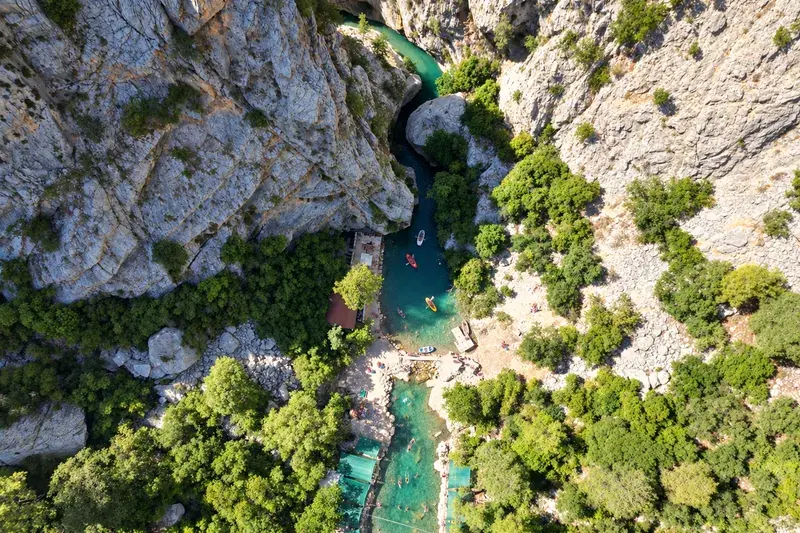
Walk to the pools at Göynük Canyon, take the ≈ $33 (€30) boat or book the ≈ $27 (€25) Safari. Allow 30–40 minutes uphill and take KA07 from Antalya Otogar. Updated -
 Nature & Outdoors
Karain Cave
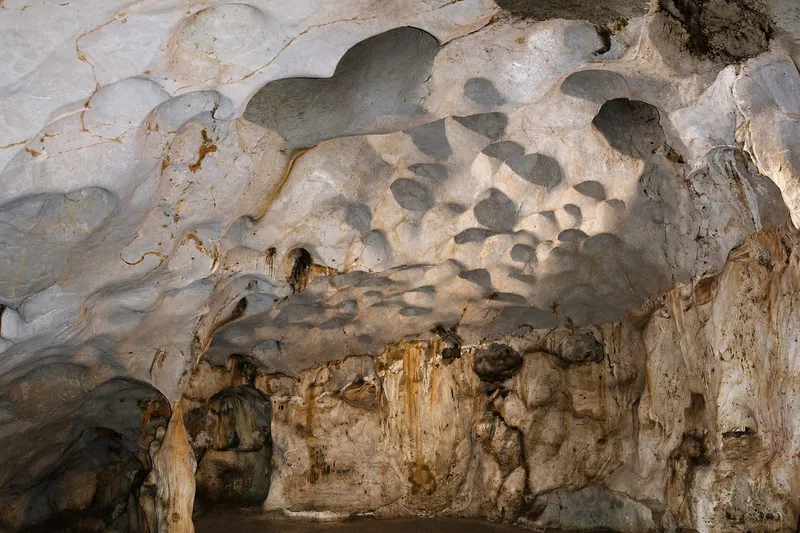
Explore Karain Cave, Turkey's largest prehistoric site near Antalya. Discover ticket prices, opening hours, and what to expect on the climb. Updated -
 Nature & Outdoors
Köprülü Canyon
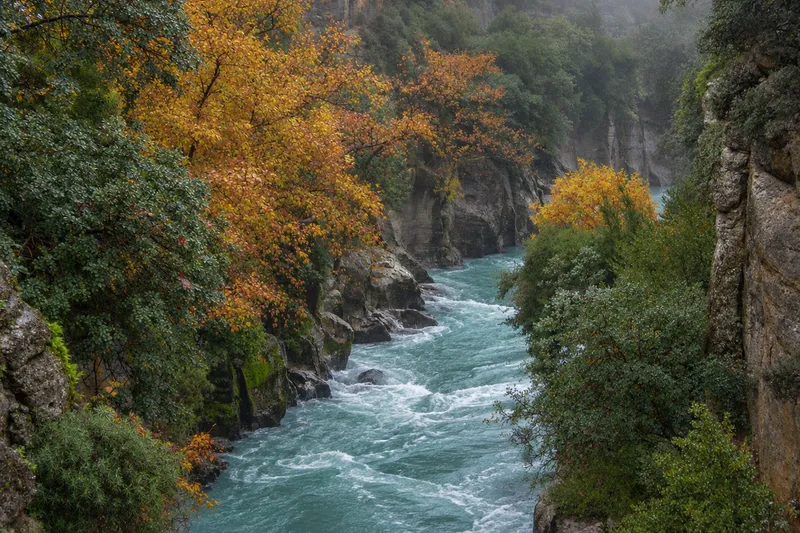
Köprülü Canyon is a full-day trip from Antalya: 14 km of rafting, Oluk Bridge and mountain drives to Selge and Tazı. Compare entry rules and transfers. Updated