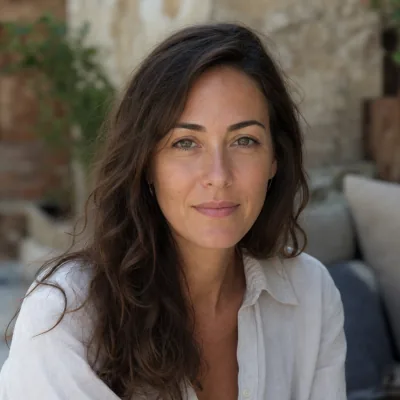
Francesca Doyle
I trace Antalya through stones, stories and studio doors, from Roman streets to mosque courtyards and new exhibition rooms.
I moved from Bristol to Antalya in my late twenties after a reporting trip along the south coast, expecting a short stay and ending up rooted here. What kept me was the way daily life sits so closely beside deep history: a morning coffee near Hadrian's Gate, the call to prayer carrying across Kaleiçi, a bus ride that ends at a museum full of Lycian sculpture. Over the years I have learned the city's rhythms beyond the postcard corners, from winter afternoons in Muratpaşa to long walks along Konyaaltı where the sea and the mountains sharpen every old stone I am about to write about.
For this site, I focus on the places that help readers understand Antalya rather than simply pass through it. I cover the Antalya Museum in detail, small collections such as Suna & İnan Kıraç Kaleiçi Museum, and religious architecture including Yivli Minare Camii, Tekeli Mehmet Paşa Camii and old Orthodox traces in the historic core. I also report on contemporary art shows at Antalya Kültür Sanat and independent exhibition spaces when they open. My pieces usually connect neighborhoods and routes, so I explain how to reach a site on Antray, by the nostalgic tram or by dolmuş from Lara, Kepez or the intercity otogar.
I verify every culture and history guide as if a reader were arriving tomorrow with only one afternoon to spare. I recheck opening hours on official museum and municipality pages, confirm holiday changes, note restoration work, and compare online ticket prices with the rate posted at the desk whenever I can. If a mosque is open to visitors outside prayer times, I say so clearly and include dress and etiquette notes based on current practice, not assumption. When I cite a date, inscription, excavation update or curatorial claim, I cross-check it against museum text, academic sources or the relevant kurum. If a story contains a partner link, I label it plainly.
An English-speaking reader benefits from my angle because I write for the questions I once had myself: what is worth the detour, what context helps a ruin make sense, and how do you visit respectfully without feeling lost in translation. I do not treat Antalya as a checklist of antiquity sites or beach districts. I place monuments inside the city people actually use, with practical detail on timing, shade, queues, transport and neighborhood character. That means you can move from a Roman gate to a Seljuk minaret, then on to a current exhibition or artist talk, with enough historical grounding to see how Antalya's past still shapes the city around you.