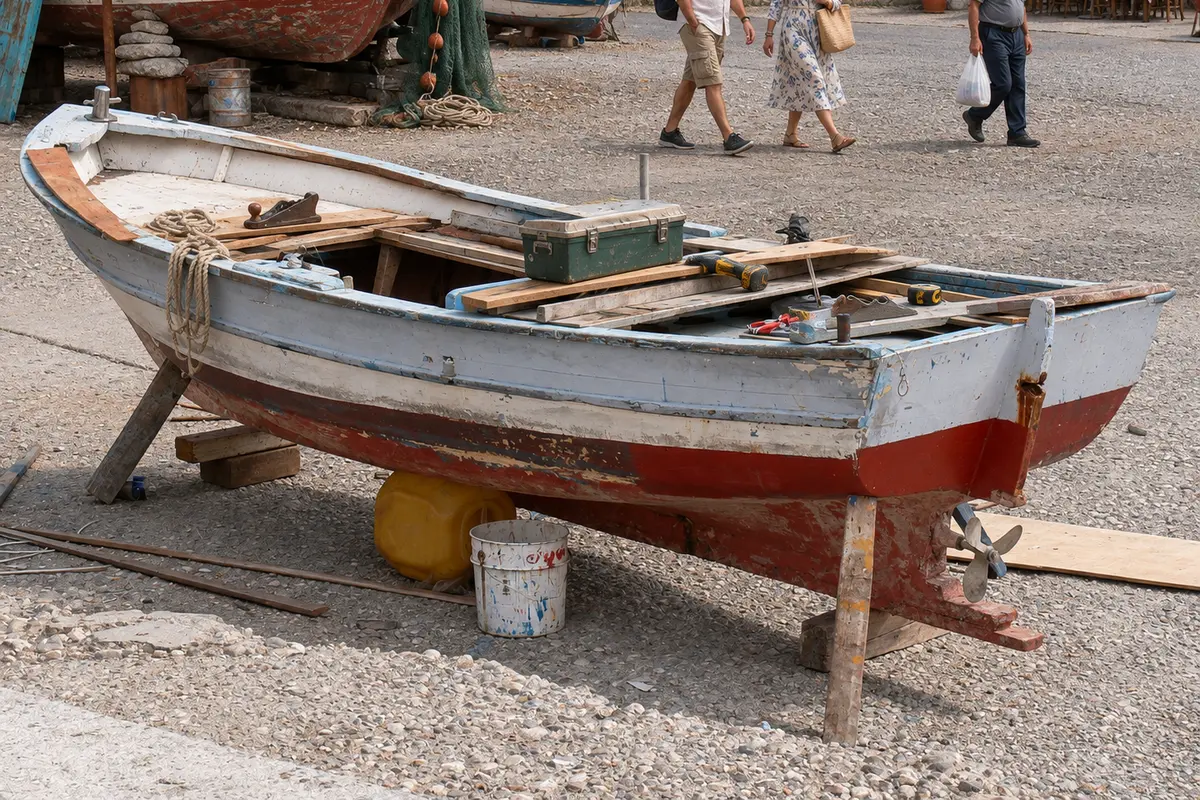
Kaleiçi harbour cruises: the simplest city outing
Kaleiçi Yat Limanı is the Old Harbour below Antalya’s historic centre. Short sightseeing boats follow the cliffs and return to the harbour, giving views back towards the old town. A one-hour coastal circuit fits between a walk through Kaleiçi and a meal ashore. Treat one hour as a trip format to book, rather than a fixed harbour timetable.
Walk down to the waterfront before committing to a boat. Identify its actual departure time, return time and furthest point: a short cliff cruise and a sailing to Lower Düden cover different ground. A city sightseeing package with a boat segment can also visit a waterfall by road. That combination alone says nothing about where the boat goes.
The harbour sits below street level, with sloping lanes and steps on approaches through the old town. For a pushchair or limited mobility, the access question continues at the gangway: boat steps, deck changes and the toilet layout matter after reaching the quay. A photograph of the boarding point is more useful than a general “family-friendly” label.
Lower Düden: sightseeing from the sea or a swimming cruise?
Lower Düden, also called Karpuzkaldıran, falls roughly 40 metres from the coastal cliffs into the Mediterranean. Upper Düden is inland; a sea cruise reaches the lower waterfall. The cliff-top park remains a separate land visit, with no visitor path down to the foot of the falls. The two settings are compared in our Düden waterfalls guide.
There are two useful formats: an out-and-back waterfall viewing cruise, and a longer coastal day with lunch and swimming stops. On the latter, the swimming location and the waterfall photo stop are separate parts of the itinerary. An advertised speedboat approach to the falls is a separate activity when sold as an extra; it adds a second boarding and a wetter ride.
Longer Antalya coastal boats also use departure points outside Kaleiçi, including Konyaaltı Fishermen’s Shelter. “Antalya Marina” without a map pin is too imprecise for arranging your own taxi. Keep the boat name and boarding pin with the booking, especially when declining the hotel-transfer option.
Kemer boat trips: bays, Phaselis and entertainment
Kemer has its own harbour southwest of Antalya. Routes along the Phaselis coast include Alacasu Cennet Bay and Cleopatra Bay, with pine-covered slopes behind the water. The named stops in the selected itinerary determine which stretch you visit. A hotel pickup in Antalya followed by boarding in Kemer is a road-and-boat day. Staying in Kemer removes that cross-city starting leg; staying in Lara or Belek adds a journey west before the cruise begins.
Phaselis is the detail that deserves particular attention. A stop offshore for swimming leaves you looking at the ancient harbour from the water. Walking the ancient streets requires a landing, archaeological-site admission and enough time ashore. A route name containing “Phaselis” alone leaves those three items unresolved. For a visit centred on the theatre, baths and main street, Phaselis by land gives you control over the archaeological visit.
Pirate boats and foam-party cruises put entertainment into the day; quieter swimming trips and private charters offer a different atmosphere. Traveller reviews describe booking what sounded like a scenic waterfall outing and finding amplified music and a foam party aboard. Make music and entertainment part of the selection, alongside the route. The same coastline can produce very different days on different boats.
Suluada and Kekova: when the longer journey earns its place
Suluada is an island off Adrasan. For an Antalya-based visitor, the outing begins with a drive south to the Adrasan departure beach. Allow a full day away from the hotel: a two-hour road leg each way is a sensible planning allowance for a shared transfer from Antalya, with the actual journey shaped by the pickup route. The island cruise comes after that drive.
The appeal is swimming and pale turquoise water around the island’s shores. Traveller discussions describe several boats arriving together and crowding the swimming areas. An island photograph with empty water is a poor basis for expecting solitude on a shared summer excursion. A private departure can change your timing, but other boats still use the same bays.
Kekova puts the emphasis on coastal archaeology near Demre and Üçağız. Excursions sold from Antalya combine overland travel with a local boat segment; the day is longer than a city harbour outing. At the protected Sunken City, swimming and diving are prohibited. Swimming breaks belong in other permitted bays. A Demre combination with Myra adds a substantial visit on land, so reserve the whole day rather than attaching an evening commitment to the advertised return.
Green Canyon is another product sold among Antalya boat excursions: it is an inland reservoir cruise in the Manavgat area. It offers a lake-and-mountain setting, with a road transfer from Antalya, rather than a Mediterranean harbour departure.
Private boat trips: what the whole-boat quote covers
A private charter reserves the boat for your group, with captain and crew. Its practical advantage is control over companions, music and the agreed balance between cruising and swimming. The captain retains control over safe navigation and anchorages. More privacy aboard still leaves shared water at popular stops.
The useful comparison is the total quote for the same harbour, duration, route and passenger count. A shorter city-coast charter and a longer Kemer bay itinerary require different fuel and operating time. “Private” on a transfer option can refer to the vehicle; the cruise itself must explicitly reserve the whole boat.
- Route and duration: named departure harbour, time aboard and intended return point.
- Boat and capacity: the vessel being supplied, passenger limit and seats in shade for your group.
- Included costs: captain, crew, fuel for that route, meal, drinking water, other drinks and hotel transport.
- Changes: payment terms, weather cancellation, refund and the treatment of a shortened or substituted route.
For a celebration or a family group, put the menu, dietary needs and music arrangement into the booking details. A clear whole-boat agreement has more value than a long list of optional extras introduced after boarding.
Booking, transfers and the real cost of the day
The prices in the booking cards belong to their available options. Use the option covering your actual hotel area and group: a meeting-point fare and a fare including hotel collection buy different journeys. Child age bands, meals and drinks also belong to the selected option.
A fare with lunch and soft drinks covers more of the day’s spending than lunch alone. Alcohol, snacks, photographs and speedboat add-ons are separate purchases when excluded. Set aside money for those only when you intend to use them; the boat ticket remains the core cost.
- Set the destination and actual boarding harbour. Locate your accommodation relative to that harbour.
- Read the selected option’s inclusions, pickup area and cancellation terms, then save the confirmation.
- Keep hotel collection time, boat departure time and estimated hotel return as three separate entries.
For independent travel within Antalya, use the city transport guide and the municipal bus and tram timetables. City transport serves the city leg; a departure in Adrasan requires its own onward and return arrangement. A shared tour transfer is simpler than stitching several connections around a fixed boat departure.
Season, children and time on deck
Summer swimming and winter sightseeing require different expectations. November through March brings greater exposure to rain, waves and cancelled sailings. Reserve a flexible day in the itinerary and read the weather-cancellation terms before paying. For a November visit, a short sightseeing cruise leaves less of the day committed to outdoor time than a full swimming itinerary. The captain decides whether conditions allow sailing. The winter sightseeing plan pairs the harbour with walks and indoor stops you can reach on foot.
Bring a swimsuit, towel, sun protection, a dry layer for the return and a waterproof pouch for valuables. Footwear with grip helps on wet boarding steps. For a full day, shaded seating and access to drinking water matter more than sun-deck photographs. Food and drink brought from outside are restricted on some boats; the selected vessel’s rules determine what goes in the bag.
Children and non-swimmers need a correctly fitting life jacket and close supervision near boarding points and swim ladders. Arrange child sizes before booking, and swim only when the crew opens the stop. Deep-water ladder entry is a different task from walking into the sea at a beach. A passenger can stay aboard during swimming breaks; comfortable shade and a usable toilet then become essential selection criteria. Families comparing a cruise with a shore day can weigh that against Antalya’s land outings by age and walking limits.
Which trip deserves your holiday time?
Choose a Kaleiçi coastal cruise for a first boat outing during a short Antalya stay, because it keeps the rest of the day available for the old town. For a holiday built around swimming, give Kemer’s bays a full day and settle the onboard atmosphere before booking. Suluada earns the extra road journey when the island itself is the priority; Kekova earns it when coastal ruins are.
Frequently asked questions
Can I use an excursion as one-way transport to another resort?
A sightseeing booking covers its stated excursion and return arrangements. Leaving at an intermediate stop requires the operator’s agreement and a separate onward plan. A swim stop offshore provides no transfer to the town.
Are MuseumPass Türkiye or Müzekart valid for the cruise?
Boat excursions are separately sold commercial services. Neither museum card pays for the cruise; any eligibility at an archaeological stop applies to that site’s admission.
Is a glass-bottom boat necessary for an Antalya harbour cruise?
The city coast’s cliffs and Lower Düden are viewed above the water, so a glass bottom adds nothing essential to those sights. At Kekova, boats follow the protected ruins from the water; the route and viewing position matter more than the boat’s label.
More in Planning & Day Trips
-
 Planning & Day Trips
Antalya Airport to the city centre: tram, bus and transfers
T1A reaches central Antalya from T1; T2 needs a free shuttle. Compare buses to Lara and Konyaaltı, payment, late arrivals and the return trip. Updated -
 Planning & Day Trips
Antalya public transport: Antalyakart, buses and trams
Antalya city rides cost ≈ $0.83 (₺42) with Antalyakart or ≈ $0.99 (₺50) by bank card. Find top-up machines, transfer rules, tram branches and Otogar connections. Updated -
 Planning & Day Trips
Where to stay in Antalya: Kaleiçi, Konyaaltı or Lara?
Kaleiçi for sights, Konyaaltı for a city beach, Lara–Kundu for resorts: compare sand, cliff access, family stays and arrival without a car. Updated