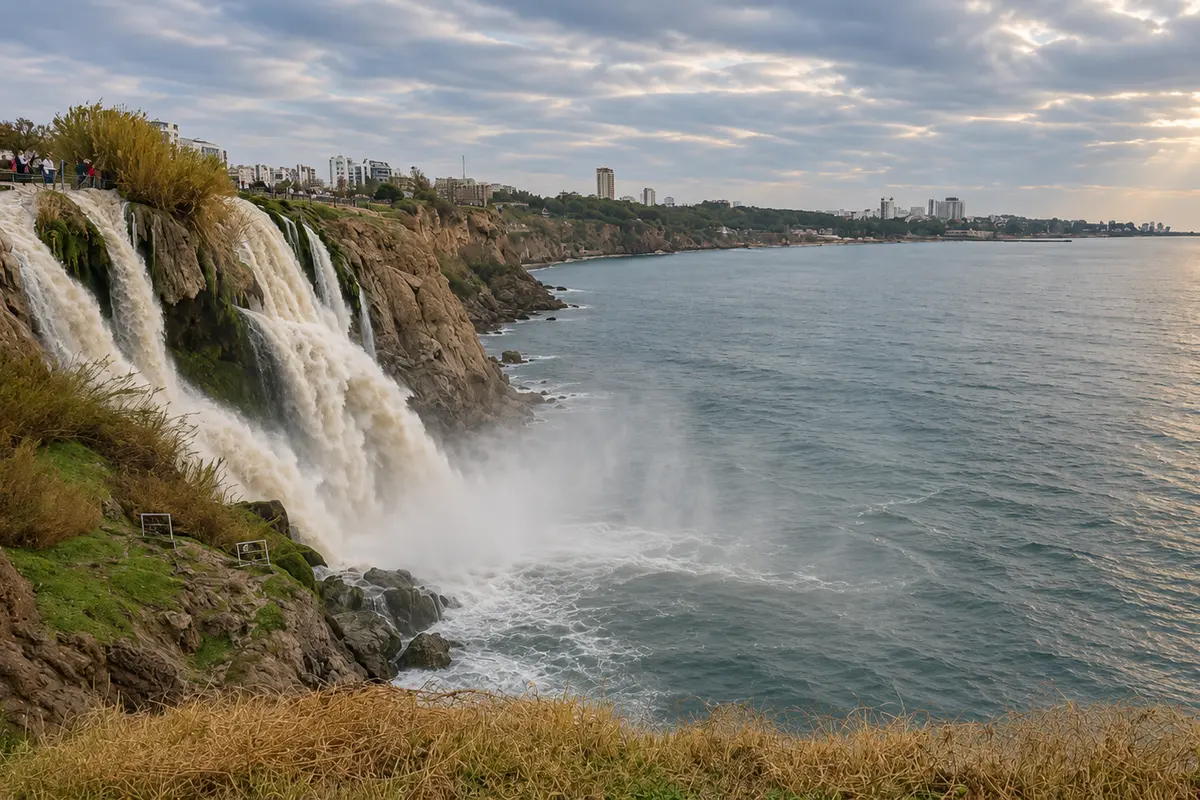
Where the four waterfalls sit on the map
Use Kaleiçi as the central reference point. Upper Düden is inland to the north in Kepez; Lower Düden is southeast on the Lara coast. Kurşunlu sits northeast in Aksu, beyond the built-up centre. Manavgat is farther east, near Side. The two Düden sites are roughly 15 km apart: they have separate entrances, and the river between them is not a visitor walking route.
- Upper Düden: search for “Yukarı Düden Şelalesi” or “Düdenbaşı” in Kepez. This is the inland cave-and-park visit.
- Lower Düden: search for “Aşağı Düden Şelalesi”, “Karpuzkaldıran” or “Düden Park” in Çağlayan, Muratpaşa. This is the waterfall falling into the Mediterranean.
- Kurşunlu: use “Kurşunlu Şelalesi Tabiat Parkı”, Aksu. The destination is the nature-park entrance, rather than just the surrounding locality.
- Manavgat: use “Manavgat Şelalesi” for the waterfall. A pin for Manavgat town or a river-cruise pier takes you to a different place.
From a Lara base, Lower Düden fits a local coastal outing. From Kaleiçi, either Düden site works as one excursion. From Side or the Manavgat hotel area, the Manavgat falls are the local option; travelling west to Antalya for another waterfall uses a much larger part of the day.
Time at the falls and the journey from Antalya
The visit allowances below are planning estimates for sightseeing, excluding meals, queues and transport. The approximate distances are road-planning figures from central Antalya, rather than bus-route lengths.
| Stop | Allow on site | From central Antalya |
|---|---|---|
| Lower Düden | 45 minutes | About 10 km |
| Upper Düden | 90 minutes | About 12 km |
| Kurşunlu | 90 minutes | About 20 km |
| Manavgat | 45 minutes | About 80 km |
For one waterfall by city bus, reserve half a day door to door, leaving space for the journey, waiting and the walk from the stop. For Manavgat from Antalya, reserve a full day and include Side; the waterfall alone is a short visit after a substantial road journey. A taxi or car makes two Antalya-area falls easier to combine, especially when the second stop lies away from your accommodation.
Lower Düden: the sea view with the least walking
At Lower Düden, the river drops roughly 40 metres over Antalya’s coastal cliffs. The approach is through a public park, with paved paths and several viewpoints. Entry to the park and land viewpoints is free. A boat fare buys a different perspective from the sea; it is separate from access on land.
The main paths are the easiest option in this comparison for a pushchair or a visitor avoiding steps. There is no cave staircase to negotiate. The exposed coastal section has less shade than the inland parks, so a hat and drinking water matter during a summer visit. Keep children beside you at the cliff railings and stay behind the barriers.
Visitor reviews describe congestion at the first popular photo position, followed by better space at another viewpoint along the path. Moving between the terraces gives different angles on the river mouth and cliff. The Lara-side paths lead to the viewpoints without descending the cliff; at Upper Düden, reaching the cave involves a staircase.
Upper Düden or Kurşunlu for a green inland walk?
Upper Düden’s distinctive feature is the cave passage behind the falling water. Steps lead into the rock, with openings looking through the spray. It is a developed recreation park with cafés, picnic areas and several viewing positions. The cave gives the visit a particular purpose even when a long woodland walk holds little appeal.
Reviews of the cave mention slippery steps and low ceilings. Wear shoes with grip and take the passage slowly. A carrier is more practical than a pushchair on that section; the upper park areas and the cave route have different access limits.
Kurşunlu’s appeal spreads beyond the main cascade. The 18-metre fall sits in a wooded canyon with seven small linked ponds. Trails, bridges and lower viewpoints make it the more walking-focused visit. The main cascade is one stop along the paths, with smaller falls linking the ponds farther into the woodland.
The route down to the water includes steps and uneven ground. The upper picnic area serves a different purpose from the lower trail, so a wheelchair or pushchair visit remains centred on the upper grounds. Toilets and refreshments belong to the entrance and recreation areas; carry water down for the walk. The Kurşunlu park guide sets out the entrance, facilities and trail limitations.
In a dry summer, Kurşunlu’s cascade carries less water. Spring gives the forest-and-water combination a stronger reason for the journey. In late summer, Lower Düden’s coastal setting offers a clearer advantage for a single sightseeing stop; shade at an inland park still leaves steps and walking in the heat.
Manavgat: a broad cascade beside a Side day
Manavgat spreads across a low river ledge rather than plunging from a tall gorge. Its appeal is the width and flow of the river, seen from landscaped visitor areas with food and drink nearby. This is a developed riverside attraction with paid admission, rather than a forest hike.
A stop here pairs geographically with Side’s ancient streets and harbour temples. From Antalya, follow the eastern coastal corridor towards Manavgat, visit the falls and spend the rest of the outing in Side. Combining Manavgat with Upper Düden, Lower Düden and Kurşunlu puts four short sightseeing stops across a long driving day.
A Manavgat river cruise and admission to the waterfall grounds are separate activities. The river mouth, where some boats make a beach stop, is downstream from the falls. A cruise title containing “Manavgat” alone leaves its land stops unresolved; the waterfall needs to appear in the actual itinerary.
Swimming: keep the waterfall stop and water time separate
None of these four visits provides a designated waterfall-swimming stop. Upper Düden’s cave is a viewing passage. At Kurşunlu, the ponds are part of the nature-park setting. At Manavgat, the visitor route follows the river’s viewing areas. Stay on the marked visitor routes at these inland sites.
Lower Düden has no public path down to a bathing beach beneath the cascade. A boat approaches it for sightseeing; swimming stops on coastal excursions take place elsewhere along their route. The boat-trip comparison separates waterfall sailings from swimming itineraries and identifies their departure areas.
For a self-guided waterfall-and-swim day, continue from Lower Düden to the public swimming sections of Lara Beach. That adds a separate journey east along the coast. Bring beach footwear and swimwear for the beach, and grippy walking shoes for an inland park.
Three routes that fit a day
City waterfalls: Upper Düden → Lower Düden
Start with the inland park in the morning, then travel to the coastal park later in the day. The transfer crosses the city, so use a half-day block with a car or taxi and leave more time by bus. This driving route from Kaleiçi through both Düden sites shows the two separate destinations. It is a road route, not a walking connection along the river.
Forest and ruins: Kurşunlu + Perge
Keep this outing northeast of Antalya. A 90-minute park walk leaves time for Perge’s colonnaded streets and stadium, with each attraction’s admission handled separately. The Kurşunlu nature-park map pin marks the woodland stop. A car or arranged transport simplifies the connection between the two; by public transport, reserve the day for the park rather than depending on a direct link to Perge.
Eastern coast: Manavgat + Side
Give most of this outing to Side’s streets, museum and harbour, adding the waterfall as a stop on the Manavgat leg of the journey. From a Side base, the road route to Manavgat Waterfall is a local excursion. An Antalya-based visitor gains more from the journey by including Side than by returning immediately after the waterfall photograph.
Buses, admission and organised outings
For the two Düden sites, city transport gets you to the relevant neighbourhood; the destination name matters more than the word “waterfall”. For Kurşunlu, the stop is outside the city centre in Aksu. Enter the full park name in the Antalyakart journey planner under “Nasıl Giderim” to find the outbound stops and return connection. Antalya’s public-transport guide explains Antalyakart, contactless payment and the route-planning tools.
Manavgat requires a different sequence: travel east to Manavgat, then take local transport towards Şelale. A Side-bound service takes you towards the ancient town instead. For a day combining the two, keep time for the local transfer between the waterfall and Side.
Lower Düden is the free land visit. Upper Düden, Kurşunlu and Manavgat have separate paid entrances. MuseumPass and Müzekart do not cover these waterfall visits. Meals, parking, a cruise and transport are additional services rather than parts of one shared waterfall ticket.
Organised trips remove the need to connect outlying parks yourself. A city-and-waterfalls itinerary suits a mixed sightseeing day; a coastal boat outing gives more time afloat. On a city tour, a short harbour cruise and a road visit to Lower Düden are different itinerary items: a boat segment alone says nothing about reaching the falls by sea.
For a first Antalya visit with only one waterfall slot, we recommend Lower Düden because the free clifftop view adds a distinctive sight with the least walking. Give Kurşunlu a separate morning for its woodland paths, or keep Manavgat for the day already assigned to Side.
Frequently asked questions
Why is Sapadere missing from this Antalya city route?
Sapadere is in the Alanya area, much farther east. Its canyon walk belongs to a separate eastern-coast excursion, especially from an Alanya base, rather than a circuit of Antalya’s city waterfalls.
What about Göynük Canyon for an active water outing?
Göynük, on the Kemer side west of Antalya, offers a canyon setting and organised activities involving the water. It is a separate excursion with an approach walk and activity-specific tickets, rather than another city waterfall viewpoint.
Which waterfall offers shelter on a rainy day?
All four are outdoor visits. Upper Düden has a cave section, but getting there still involves outdoor paths and wet steps. For sustained rain, an indoor activity is a more practical use of the day.
More in Nature & Outdoors
-
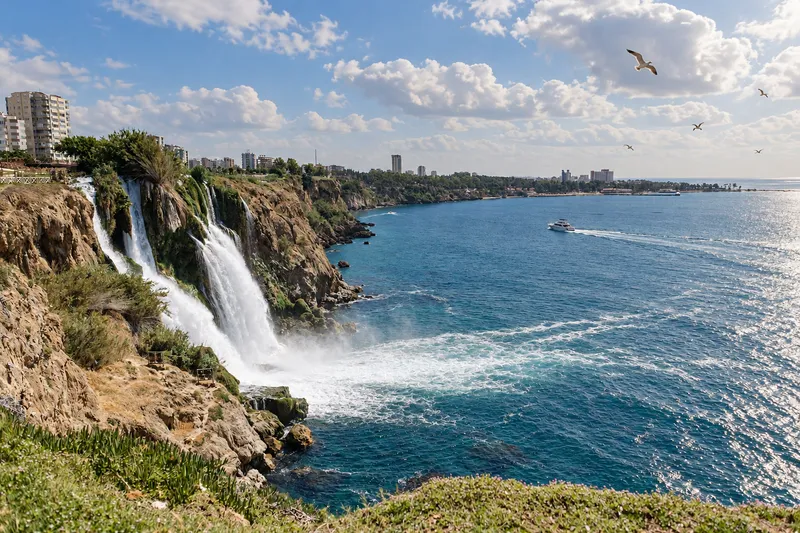 Nature & Outdoors
Düden Waterfalls
Plan your visit to Düden Waterfalls in Antalya. Check ticket prices, opening hours, cave access details, and tips to avoid crowds. Updated -
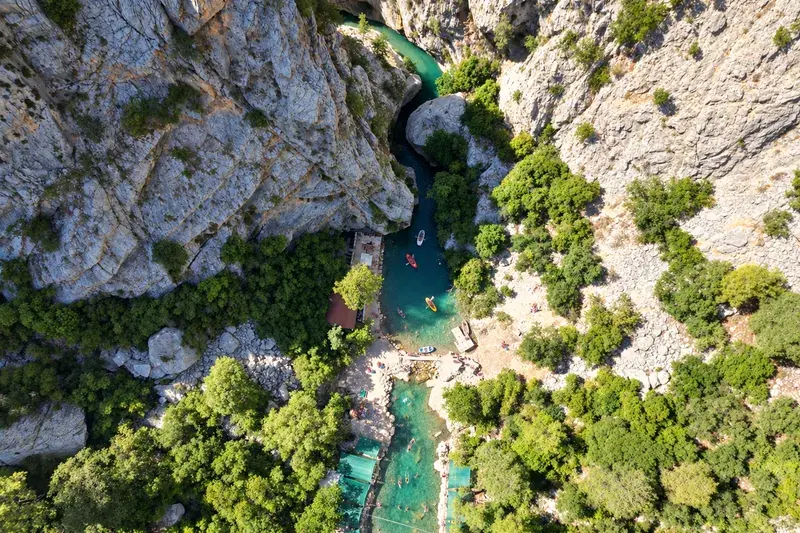 Nature & Outdoors
Göynük Canyon
Walk to the pools at Göynük Canyon, take the ≈ $33 (€30) boat or book the ≈ $27 (€25) Safari. Allow 30–40 minutes uphill and take KA07 from Antalya Otogar. Updated -
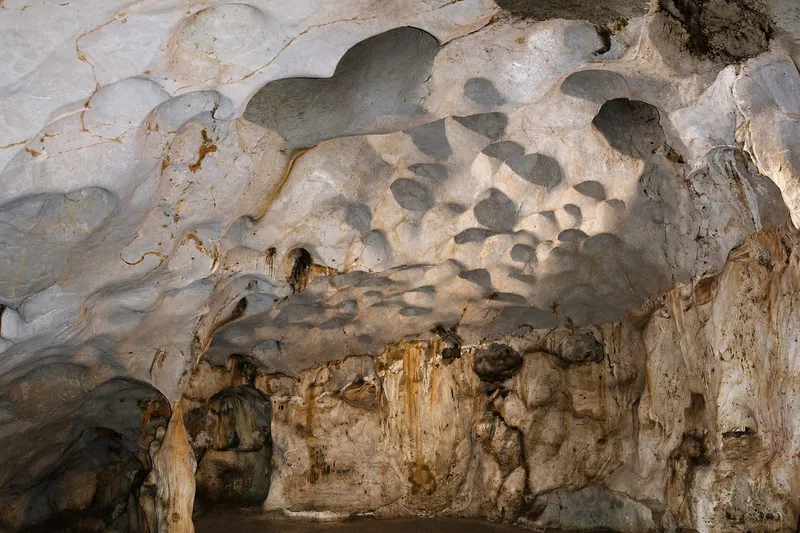 Nature & Outdoors
Karain Cave
Explore Karain Cave, Turkey's largest prehistoric site near Antalya. Discover ticket prices, opening hours, and what to expect on the climb. Updated