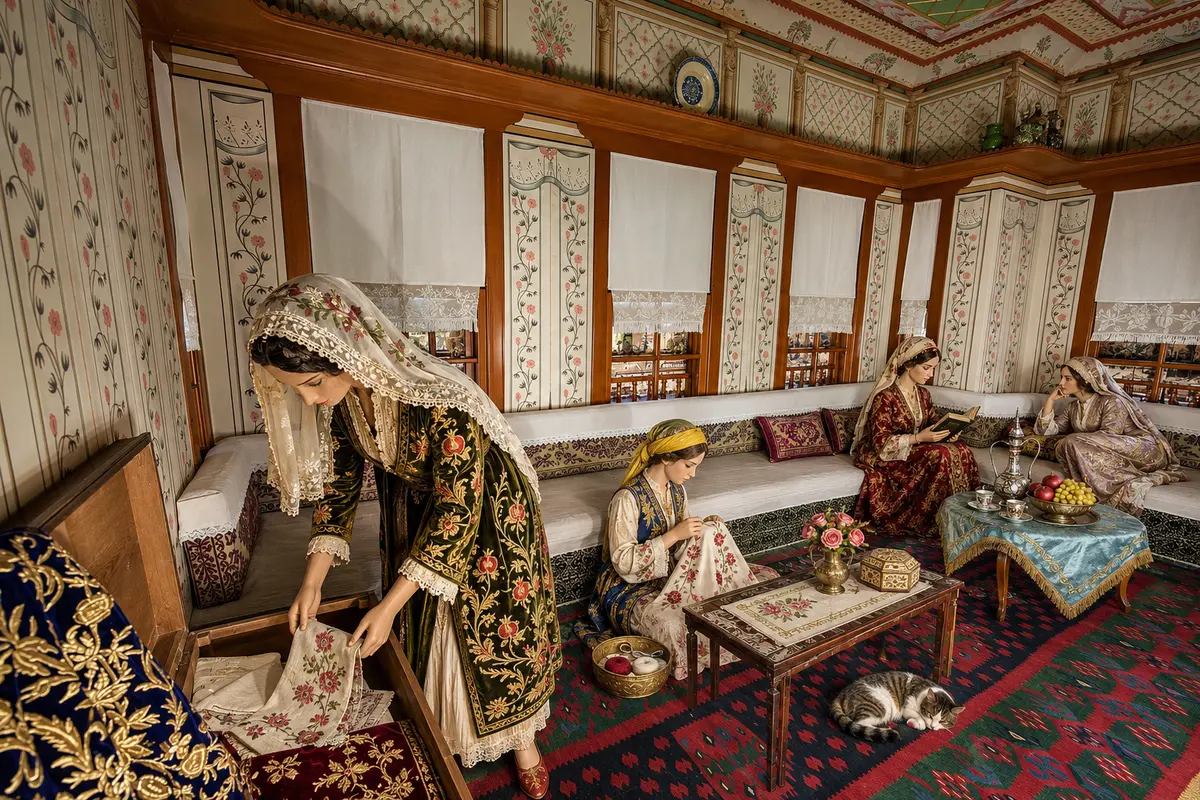
The seven-night Antalya budget shows what sharing one room saves and which costs still rise with each extra guest.
For a week of buses and day trips, the seven-day plan from one Antalya hotel shows where a room near the tram saves a daily journey.
Kaleiçi: the location of the room matters as much as the hotel
The old town clusters around Hadrian’s Gate, the harbour and lanes of restored houses. Accommodation includes courtyard guesthouses and boutique hotels within the historic street network. Kaleiçi’s walking route links the landmarks without a daily journey into the centre.
There are two distinct accommodation positions. A room inside the lanes puts restaurants and bars around the corner. A room outside the walls near Atatürk Caddesi or Kalekapısı puts the main streets and city transport closer to the entrance. The latter reduces the luggage journey through the lanes, but a main-road-facing room introduces traffic noise.
One traveller planning an adult group holiday highlighted the trade-off between walking to Kaleiçi nightlife and noise at the hotel. That is a room-level issue: recent reviews mentioning a neighbouring bar, street-facing bedroom or courtyard music tell you more than a district-wide “quiet” label. An interior-facing room and a room above a music venue are different bookings within the same area.
The descent towards the harbour includes slopes, steps and uneven stone paving, making luggage harder to wheel. A hotel entrance in an upper lane can save repeated climbs. For a car or transfer, the usable drop-off point and the entrance need to be identified separately: narrow historic lanes complicate door-to-door access.
Mermerli is the small beach by the marina. It does not give every old-town hotel a private beach, and the harbour waterfront is not a continuous sandy bathing shore. Daily long-beach swimming from Kaleiçi adds a journey to Konyaaltı or Lara.
Booking the right property within the area
Search with the full party, including children’s ages, and read the room configuration: “family room” can describe one shared sleeping space. A separate bedroom, cooking facilities and a lift are individual property features. Neither a neighbourhood name nor a sea-view filter establishes any of them.
Konyaaltı: distinguish the beach from the whole district
Konyaaltı Beach runs along Antalya’s western waterfront. Its predominantly pebble surface and long promenade support a city holiday built around swimming, walking and eating out, rather than remaining inside a single hotel complex.
At the eastern end, Beach Park and Arapsuyu put the accommodation search near the beach’s city-facing side. Farther west, Altınkum, Gürsu and Liman spread the search along the coast. A Konyaaltı address alone says little about the walk to the water: the district extends inland, and its eastern and western ends are separate transport destinations.
The promenade is useful for a pushchair, but the journey from bedroom to sea also includes the hotel exit, road crossings and the pebbles themselves. A flat seafront walk and a manageable sea entry are separate requirements. Water shoes help on stones; children and weak swimmers still need close supervision and a staffed bathing area where available.
A hotel behind the waterfront road differs from a resort with grounds extending to a beach. For accommodation inland, trace the walking route to a named beach entrance rather than measuring a straight line to the shoreline. This also reveals whether carrying beach bags back for a child’s nap is realistic.
Lara: three accommodation zones under one name
Şirinyalı, Fener and Çağlayan: above the cliffs
These urban neighbourhoods sit along the eastern coastal side of Antalya. Restaurants, apartments, hotels and parks occupy the city above the sea. A sea-view balcony here can overlook cliffs rather than a walk-out beach.
Swimming access is concentrated at specific places. İnciraltı Halk Plajı is at Lara Caddesi No. 28/3 in Şirinyalı; Konserve Koyu Halk Plajı is at No. 82/1. The municipal beach locations and directions identify the entrances. A property’s distance to one of those entrances is more useful than its distance to the blue area on a booking map.
Çağlayan also puts the coastal Lower Düden waterfall in this side of the city. The waterfall drops over the cliffs; its viewpoint is a park outing, not a sandy beach entrance.
Güzeloba and Lara Halk Plajı: the public sandy shore
The coast by Lara Halk Plajı gives access to sand, with public sections and separately operated beach facilities. Güzeloba also extends away from the waterfront, so a neighbourhood label does not establish walking access. A hotel near the public beach and an apartment near the airport side of the neighbourhood involve different daily journeys.
Public beach access does not automatically include an operator’s loungers, umbrellas or food. Those are separate services. A city hotel’s breakfast rate and a resort’s all-inclusive rate therefore cover different parts of the day, even when both listings use “Lara”.
Kemerağzı and Kundu: the resort coast
Farther east, the large beachfront resort strip includes properties marketed with Lara in their names. Meals, pools, entertainment and a designated beach form the centre of these stays. Beachfront access, a road crossing and a beach shuttle are materially different arrangements; the property description needs to state which one belongs to the booked hotel.
Leaving this strip for Kaleiçi means a separate bus, taxi or transfer journey in each direction. An all-inclusive meal left unused during a sightseeing day remains part of the room package. Conversely, a day spent at the hotel uses facilities that a small city guesthouse does not offer. This is the useful comparison before comparing room totals.
Families, pushchairs and limited mobility
For a family taking a beach break around a child’s nap, the practical distance is from the room to a usable beach entrance. A shorter return walk matters more than a hotel being in the same district as the beach. At a large resort, that route also includes the walk through the grounds. The family outings by age and walking effort comparison separates paved buggy routes from beach access and stepped sightseeing.
For wheelchair access, the route needs to work through the room, lift, hotel exit, pavement, beach entrance and water-entry point. İnciraltı and Konserve Koyu are cliff beaches, so their position on the coast alone says nothing about a step-free route. A documented accessible entrance and water-entry arrangement are the relevant property and beach features.
A children’s club, waterslide or outdoor pool also has its own operating season and age rules. A winter booking needs the winter facilities list; summer photographs do not establish which pools or activities are operating during that stay.
Arrival and sightseeing without a car
The airport tram serves the city centre from the Terminal 1 and domestic-terminal area; International Terminal 2 requires a terminal connection before boarding. It does not deliver passengers to the Konyaaltı waterfront or the Lara–Kundu hotel strip. Konyaaltı and Lara stays require a road journey for at least the final leg.
For a central stay, airport arrival options include the tram followed by a walk towards Kaleiçi. A beach-area stay adds the relevant bus connection or a vehicle to the exact address. The airport’s public-transport connections and departure-time links help establish the arrival route.
City buses connect beach neighbourhoods with the centre. Antalya’s public-transport payment system uses Antalyakart or a contactless bank card rather than cash on board. Staying beside your main daily activity reduces the number of cross-city journeys: a waterfront stay concentrates beach days locally, while a central stay concentrates old-town evenings locally.
For an excursion with hotel collection, the named pickup address matters more than “Antalya” in the product title. A meeting point in central Antalya and a Kundu hotel pickup are different arrangements. The day-trip route comparison separates the eastern ancient sites from western coastal outings so that the journey matches the day’s destination.
The base we would book for a first visit
For a first trip built around sightseeing and evenings out, we recommend the upper edge of Kaleiçi because it keeps the historic centre on foot and reduces the luggage journey through the lower lanes. For daily swimming alongside independent restaurants, choose a Konyaaltı property with a walkable beach entrance; for a holiday centred on sand, pools and included meals, choose a beachfront Lara–Kundu resort with those facilities in the booked package. Before paying, pin both the accommodation entrance and the exact place where you will reach the sea.
Frequently asked questions
Are Belek and Side neighbourhoods of Antalya city?
No. They are separate resort destinations east of Antalya. A stay there changes the holiday base and the journey into Antalya; it is not equivalent to booking a room in Kaleiçi, Konyaaltı or urban Lara.
Is a hotel beside Antalya Airport useful for a sightseeing stay?
It serves a flight connection or an overnight stop. The airport is inland, so that location adds a journey for both the old town and the beach. A terminal transfer service also needs to serve the terminal used by your flight.
Is it worth splitting a stay between the old town and a resort?
A split stay works when the trip contains two distinct blocks: city sightseeing followed by days using resort facilities. For three full days, changing hotels consumes time in packing, luggage storage and a second check-in; one base preserves more of the visit.
More in Planning & Day Trips
-
 Planning & Day Trips
Antalya Airport to the city centre: tram, bus and transfers
T1A reaches central Antalya from T1; T2 needs a free shuttle. Compare buses to Lara and Konyaaltı, payment, late arrivals and the return trip. Updated -
 Planning & Day Trips
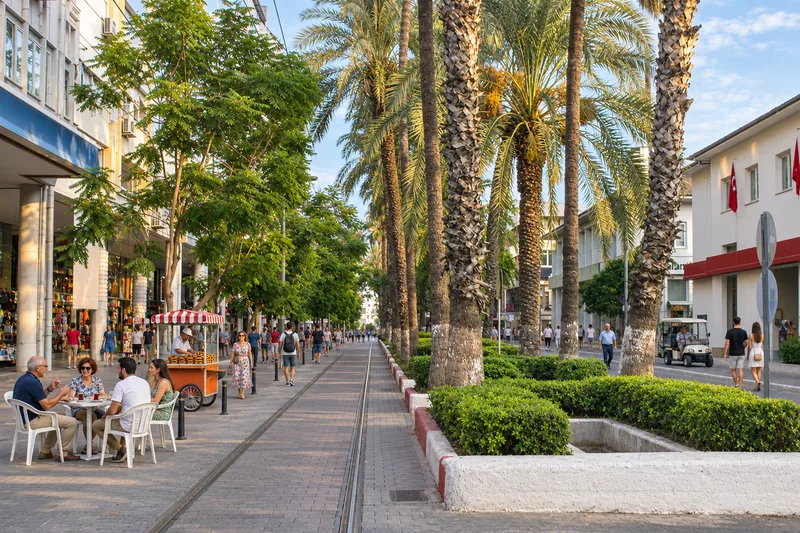
Antalya public transport: Antalyakart, buses and trams
Antalya city rides cost ≈ $0.83 (₺42) with Antalyakart or ≈ $0.99 (₺50) by bank card. Find top-up machines, transfer rules, tram branches and Otogar connections. Updated -
 Planning & Day Trips
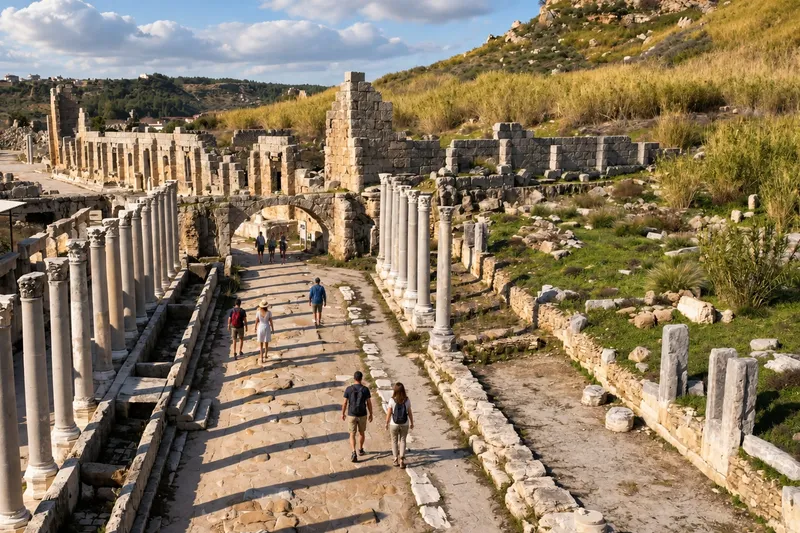
Day trips from Antalya: choose a route that fits your day
Pair Perge with Aspendos, choose Phaselis for the coast or Termessos for a mountain walk. Compare four outings and plan transport from Antalya. Updated