| Travel window | Verdict | Reason or condition |
|---|---|---|
| January–February | City break | Choose for the old town between wet spells, with indoor time built into the trip. |
| March–April | Walking first | Choose for ruins and city walks; sea swimming involves cold water. |
| May | Spring balance | Choose when sightseeing matters more than long swims in warm water. |
| June | Beach weather | Choose for swimming and low rainfall, with exposed ruins early in the day. |
| July–August | Heat trade-off | Choose for a beach-led trip if sustained heat is acceptable. |
| September | Best balance | Choose for warm sea and a mixed trip; daytime heat still limits long walks. |
| October | Autumn balance | Choose for swimming plus walking, accepting rain interruptions. |
| November–December | Flexible plans | Choose for a city stay with outdoor days moved around the weather. |
Antalya weather month by month
These are coastal Antalya air-temperature normals for 1991–2020. High and low mean the average daily maximum and minimum; rainy days are monthly averages rounded to whole days. They describe a season, not the forecast for a particular week. A rainy day can include both sunshine and showers.
| Month | Average high / low | Rainy days |
|---|---|---|
| January | 15.0°C / 5.9°C | 13 |
| February | 15.9°C / 6.5°C | 11 |
| March | 18.4°C / 8.3°C | 10 |
| April | 21.8°C / 11.3°C | 8 |
| May | 26.4°C / 15.7°C | 7 |
| June | 31.6°C / 20.1°C | 3 |
| July | 34.9°C / 23.4°C | 1 |
| August | 34.9°C / 23.7°C | 1 |
| September | 31.7°C / 20.1°C | 3 |
| October | 27.3°C / 15.9°C | 6 |
| November | 21.6°C / 10.7°C | 8 |
| December | 16.7°C / 7.5°C | 12 |
Swimming: why autumn beats spring for warmer water
The sea retains summer heat into autumn and warms more slowly than the air in spring. Monthly seawater averages for the Turkish Mediterranean coast over 1970–2024 put April at 18.1°C, May at 20.7°C, June at 23.9°C, July at 26.7°C, August at 28.1°C, September at 27.0°C and October at 24.5°C. These are regional sea averages, rather than measurements at a particular Antalya beach.
This difference matters most in May and October. Their daytime air temperatures are similar, but October’s water is warmer. May swimming involves a cooler entry and less comfortable long sessions for cold-sensitive swimmers; June has warmer water and drier weather. September retains warm water while bringing daytime heat below the July–August peak.
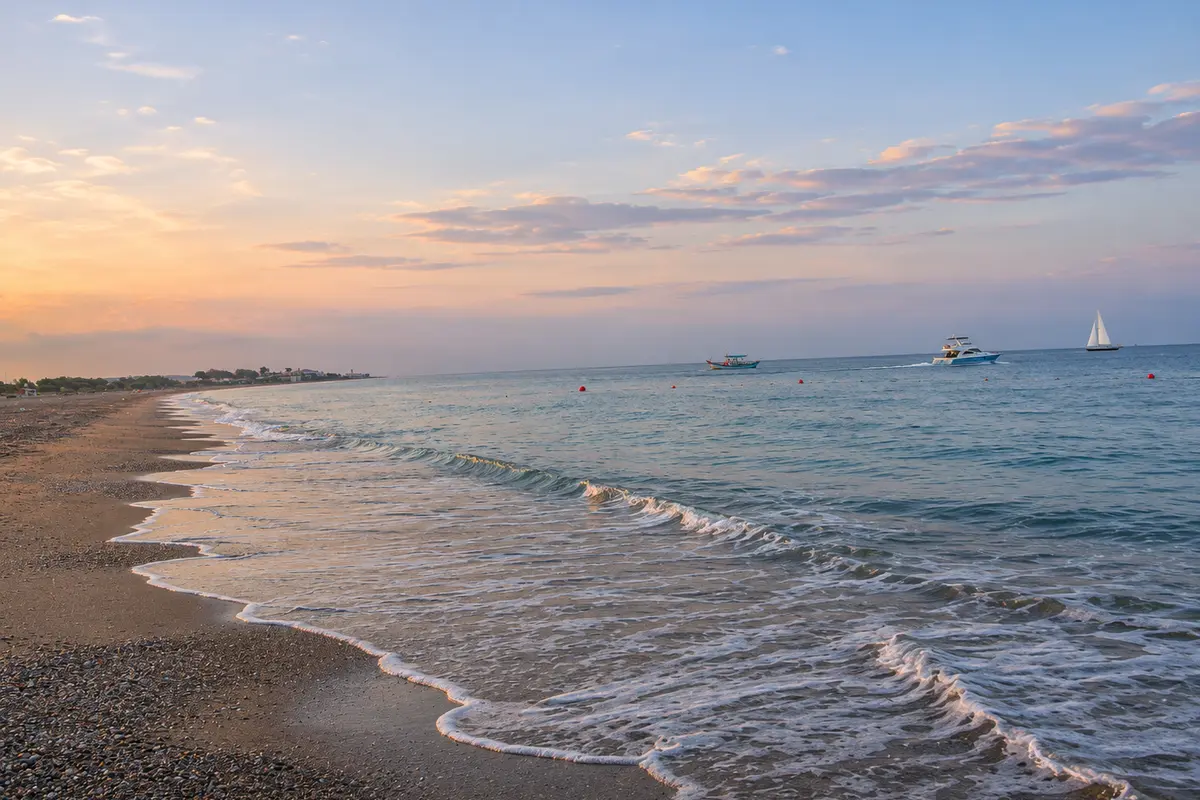
At Konyaaltı Beach, pebbles underfoot and a promenade behind the shore shape the day; Lara Halk Plajı has sand. Warm water alone says nothing about waves. Follow the beach flags and lifeguard instructions; stay out when swimming is prohibited.
April: good walking weather, a different kind of family holiday
April brings spring conditions to the old town and archaeological sites, with a much cooler start and finish to the day than in summer. Walking shoes, a light rain shell and an evening layer cover different parts of that day. An unheated outdoor pool follows the weather and its own depth and exposure; a hotel listing that says “pool” gives no heating temperature.
One parent booked on Lara Beach for 1 April was disappointed by a rainy forecast and wanted activities for the children when the beach and pool were out. The practical gap was an indoor alternative already included in the holiday plan.
Antalya Aquarium provides an indoor alternative near the eastern end of Konyaaltı Beach. An April city day can include Kaleiçi’s lanes and harbour, cafés and short outdoor stops between showers. For a resort booking centred on children swimming daily, the material detail is an explicitly heated pool available during the stay, with its opening dates and temperature stated in the accommodation offer. Beach weather and heated-pool access are separate parts of that booking.
June to September: heat changes the sightseeing day
June and September both have average daytime highs above 31°C. July and August reach almost 35°C, and individual afternoons exceed the monthly average. The low rainfall makes beach planning easier, but a long exposed archaeological walk becomes a different physical task.
Perge involves walking across open ancient streets and ruins. In the summer pattern, the archaeological visit occupies the first part of the day after opening, with a substantial indoor break before an evening walk. Carry water and sun protection; stop the walk and move into shade if the heat becomes difficult to tolerate.
Termessos adds an uphill approach and uneven ground. The uphill walk adds exertion even when the air is cooler than on the coast. At Phaselis, ruins and the harbours allow walking and swimming to occupy separate parts of one coastal visit.
October: warm sea with more room for rain
October’s average high remains warm enough for a beach afternoon, while its lower night temperatures change how an evening meal outdoors feels. Rain becomes a more significant planning factor than in September. The monthly total rises from 22.0 mm in September to 76.6 mm in October: several wet hours can matter more to a short holiday than the monthly count of rainy days.
Travellers praised autumn swimming, while one holidaymaker planning a resort stay on 12–20 October worried about losing beach days to rain. The concern is how a wet spell affects a fixed week of leave, even with warm seawater.
For a short stay, a city base leaves restaurants and short walks within reach when a beach afternoon falls through. A resort stay with daily swimming as its central activity depends more on the hotel’s indoor facilities. There is no fixed October date when the sea season ends; the day’s wind, waves and rain determine what happens at the shore.
November to March: winter sun between wet spells
November still has mild afternoons, but rain increases. December has the highest average rainfall in this climate series, at 271.7 mm; January follows at 210.6 mm. Winter sunshine belongs alongside the possibility of heavy rain in the same trip. A beach promenade remains an outdoor walk, with a jacket and somewhere indoors nearby.
A coastal forecast does not describe an uphill route in the Taurus Mountains. Elevation brings colder conditions, while rain makes exposed stone and steep paths slippery. For a wet-weather day, a city programme with cafés, shops and indoor visits avoids making a mountain walk the only planned activity.
A three-day Antalya itinerary can retain its old-town day and archaeological outing, with the beach day becoming a waterfront walk. The winter sightseeing plan pairs those outdoor days with indoor stops near Kaleiçi.
Forecasts for the final few days
Near departure, the five-day Antalya forecast helps place exposed walks on drier days. The three-day marine forecast includes Mediterranean wind and waves; the region is labelled “Akdeniz”. At the beach, local restrictions take priority over a favourable forecast.
For one trip combining beaches and ancient sites, we recommend September because the sea retains summer warmth and rainfall remains low. For walking as the main purpose, April or May reduces the heat burden; October is the alternative when warmer swimming water matters more than the extra rain risk.
Frequently asked questions
Does a sea-view hotel in Lara have a sandy beach?
Lara covers both a clifftop urban district and a sandy resort coast farther east. A sea view describes the view from the building; beach access depends on its exact address. Lara Halk Plajı is the public sandy beach.
Does Antalya Airport close outside the summer season?
Antalya Airport operates year-round. A particular direct flight route can be seasonal, so a winter journey can involve a connection even while the airport remains open.
Does a beach’s Blue Flag status mean swimming is safe all year?
Blue Flag status concerns a beach’s environmental, water-quality and management standards. Wind, waves and the flags displayed at the beach determine whether entering the water is appropriate on the day.
More in Planning & Day Trips
-
 Planning & Day Trips
Antalya Airport to the city centre: tram, bus and transfers
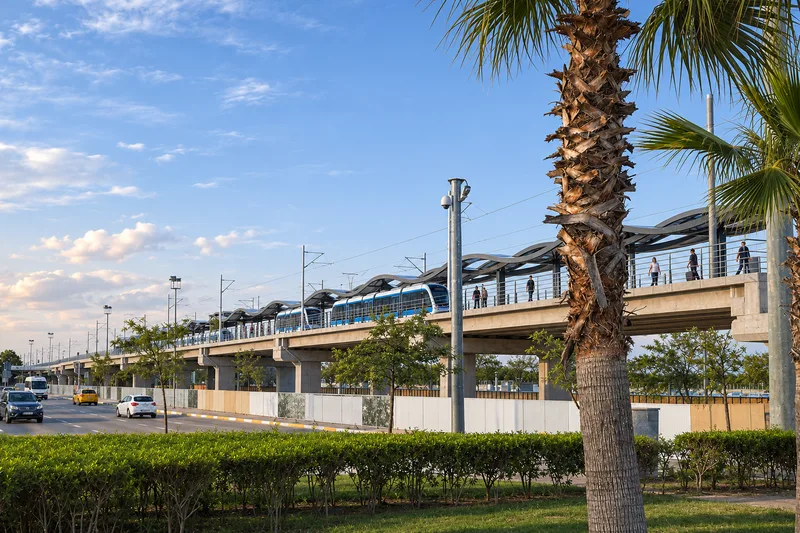
T1A reaches central Antalya from T1; T2 needs a free shuttle. Compare buses to Lara and Konyaaltı, payment, late arrivals and the return trip. Updated -
 Planning & Day Trips
Antalya public transport: Antalyakart, buses and trams
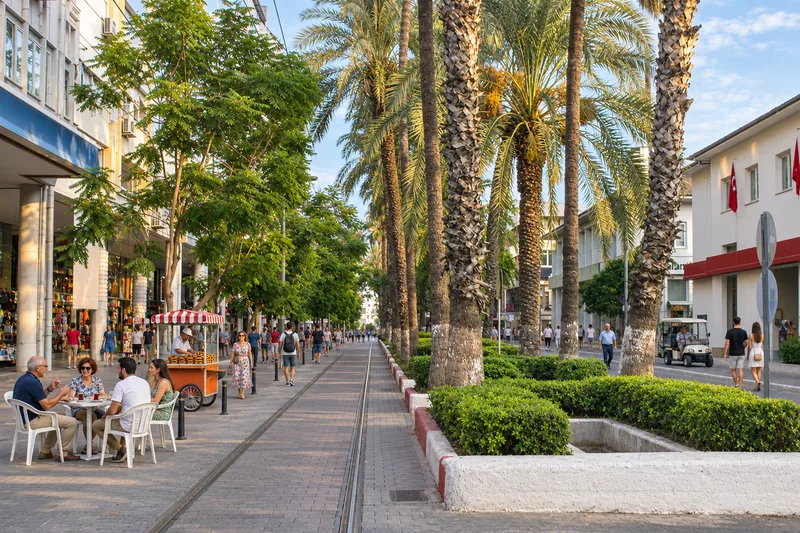
Antalya city rides cost ≈ $0.83 (₺42) with Antalyakart or ≈ $0.99 (₺50) by bank card. Find top-up machines, transfer rules, tram branches and Otogar connections. Updated -
 Planning & Day Trips
Where to stay in Antalya: Kaleiçi, Konyaaltı or Lara?
Kaleiçi for sights, Konyaaltı for a city beach, Lara–Kundu for resorts: compare sand, cliff access, family stays and arrival without a car. Updated