Fares: travel credit and the card cost are separate
| Payment | Adult boarding fare | What it includes |
|---|---|---|
| Standard Antalyakart | ≈ $0.83 (₺42) | One boarding, with eligible transfers under the rules below. |
| Contactless bank card | ≈ $0.99 (₺50) | One boarding; no free transfer. |
| Kullan-At disposable ticket | ≈ $0.91 (₺46) per ride | Preloaded rides; no free transfer, plus a separate ticket-card charge. |
The ordinary plastic Tam Kart costs ≈ $2 (₺100) before travel credit. A first purchase loaded for four paid boardings therefore costs ≈ $5.3 (₺268); four bank-card boardings cost ≈ $4 (₺200). At 12 paid boardings, the totals are ≈ $12 (₺604) with a newly bought plastic card and ≈ $12 (₺600) by bank card. At 13, they are ≈ $13 (₺646) and ≈ $13 (₺650) respectively. These totals assume full adult fares and no free changes; eligible transfers make the transport card worthwhile sooner.
The disposable Kullan-At has a ≈ $0.40 (₺20) card charge and is sold with two or five rides. A two-ride ticket totals ≈ $2.2 (₺112), so it costs more than two direct bank-card boardings. Its remaining rides cannot be replenished.
Buying and topping up an Antalyakart
Standard cards are sold through card-sale/top-up machines, authorised dealers and card centres. The machine label Kart Satış ve Dolum means card sales and credit loading. A payment for the plastic card and money loaded for journeys are different items on the purchase screen.
Useful machine locations include:
- Old town: opposite İsmetpaşa tram stop; also at Muratpaşa beside MarkAntalya on Şarampol Caddesi.
- Konyaaltı: outside 5M Migros on Atatürk Bulvarı, and beside the ATMs at Konyaaltı Kent Meydanı Parkı on Gazi Mustafa Kemal Bulvarı.
- Lara: beside TerraCity on Tekelioğlu Caddesi, at stops 10116 and 10118.
- Otogar: at the tram stop and beside the bus terminal’s İlçeler entrance.
- Airport: at the tram station on the T1/domestic side.
The card-sale and top-up machine directory lists locations by street and stop. At a machine, follow the displayed payment options; authorised shop dealers take cash for top-ups.
The Antalyakart Mobil app downloads give access to the journey planner, stop information and physical-card top-ups. For an online load, enter the transport-card number, select an amount and complete the bank’s payment authorisation. Online credit reaches the physical card when it is next presented to a validator or turnstile. The first validator contact applies the pending load; the reader’s accepted-journey message confirms boarding. The app’s balance screen itself is not a ticket.
One traveller staying in Lara reported a hotel asking ≈ $5.5 (€5) for an Antalyakart. A hotel offer can bundle a card and travel credit; an itemised price distinguishes the plastic from the usable balance.
Boarding, payment confirmation and transfers
On a city bus, enter at the front and present the card to the reader. At an AntRay station, payment is at the entrance turnstile. Wait for the accepted-payment message before moving through. For a bank card, remove it once the charge appears; holding it against the reader after payment triggers an already-used-card warning. There is no exit tap for the standard flat city fare.
One free Antalyakart transfer applies from five minutes to one hour after the first boarding. Between different tram lines, the window extends to two hours. A second tap within the initial five minutes does not qualify. Further boardings of the same line, including its matching A variant, are excluded. M-plated vehicles, terminal services and routes DC27, 500, 501, 514, 515 and 515A also have no transfer entitlement.
An ordinary, non-personalised Tam Kart can pay for more than one person. However, a second passenger’s immediate tap removes the transfer entitlement under the five-minute protection rule. For two people making connections, sharing one card loses the benefit that two separately used cards provide. Personal discounted cards belong to their named holder.
Reading the tram network: airport, Expo and Müze
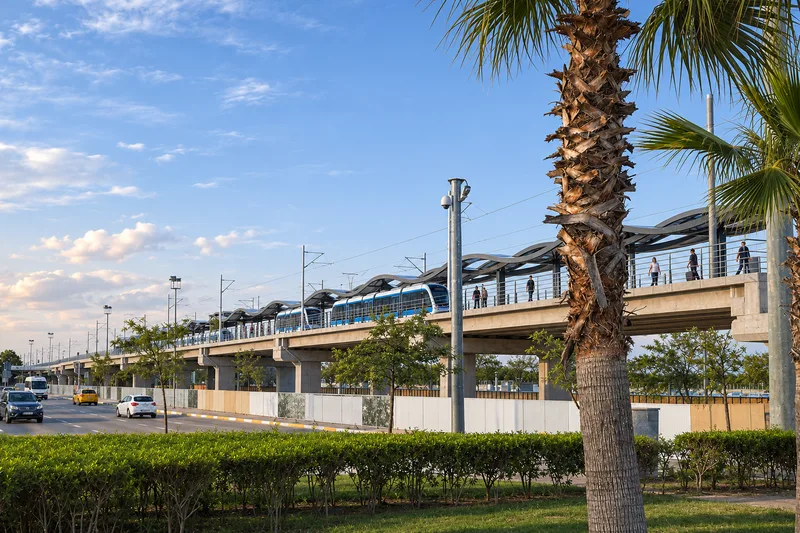
The modern AntRay network has a shared T1 corridor through the centre and separate eastern destinations. The names on the destination display matter more than the colour on a saved map:
| Line or corridor | Route | Visitor use |
|---|---|---|
| T1A | Fatih–Havalimanı | Airport, Otogar and central stops including Muratpaşa and İsmetpaşa. |
| T1B | Fatih–Expo/COP31 | Shares central tracks, then continues towards Aksu and Expo instead of the airport. |
| T3 corridor | Varsak–Otogar/Batıgar–Müze | University and western city connections; bus replacement during the current tram reassignment. |
| T2 heritage corridor | Zerdalilik–Müze | Nostalgia tram suspended; buses cover the corridor. |
The T3 corridor is currently served by buses: its trams have been reassigned to the Fatih–COP31 section. The T1 operating plan changed from 9 November 2026 for the conference. Separately, the heritage T2 tram was suspended in July 2026 for technical and safety work. An old network map showing both as operating tram rides will send you to the wrong boarding arrangement. The current tram service notices show the replacement arrangements and subsequent changes.
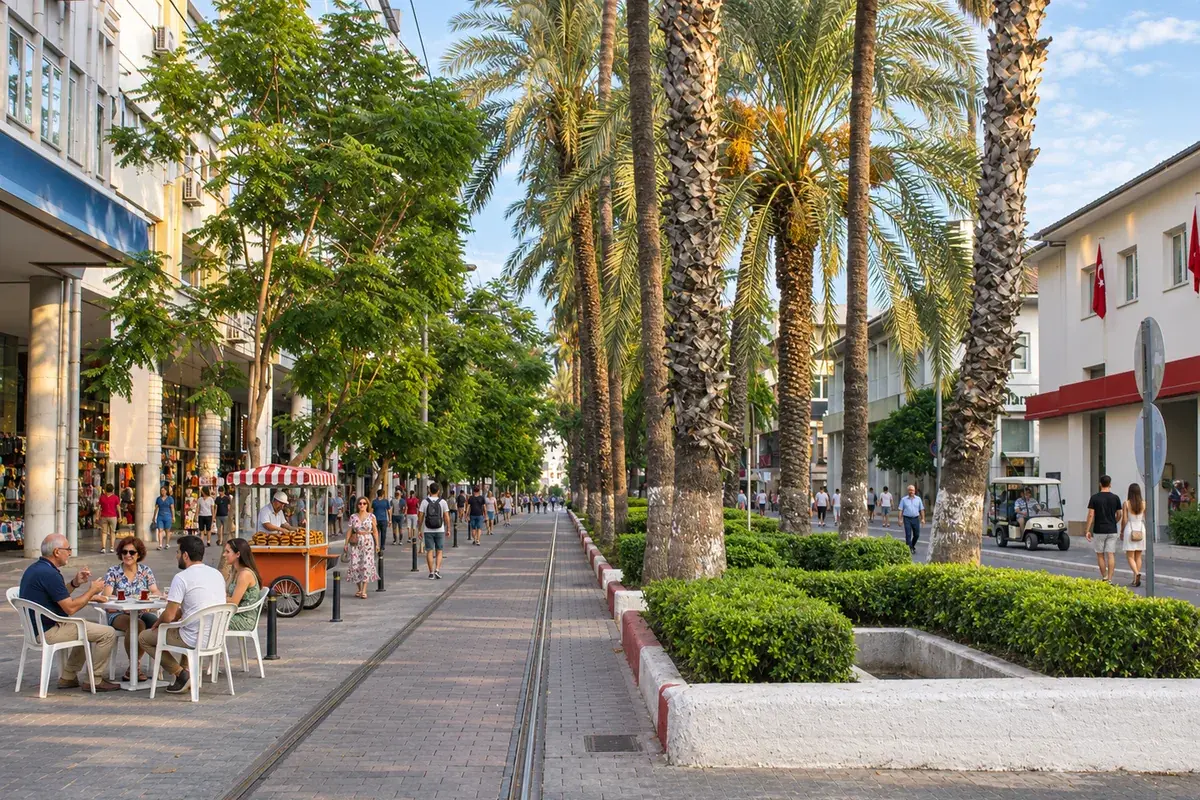
For Kaleiçi, İsmetpaşa is a central T1 access point; the final leg is on foot through the old-town streets. Muratpaşa serves MarkAntalya farther north. On the return to the airport, the display must say Havalimanı. Expo/COP31 services sharing the same tracks lead to a different destination.
At Antalya Airport, rail access is on the T1/domestic side. International Terminal 2 requires the terminal connection before the tram. The airport arrival route includes that walking and shuttle leg. The heritage line name T2 has no connection with the airport’s Terminal 2.
City buses, beach journeys and finding the right stop
The wheelchair boarding advice for Antalya transport covers the airport terminal approach, tram platform gaps and ramp access at both bus stops.
Bus route codes include letters and numbers: KL08 and LC07A are complete codes, so dropping a letter changes the search. KL08 links Sarısu and Güzeloba through Konyaaltı and the central city. Its western section serves the 5M Migros and Atatürk Bulvarı corridor; the named beach entrance determines the final stop and walk for Konyaaltı Beach. Müze is the eastern approach to the beach; the T3 replacement journey still leaves a descent from the clifftop to the waterfront.
For Lara, a destination near TerraCity, Lara Halk Plajı and a resort in Kundu are separate journeys. A hotel name containing “Lara” does not identify its stop. The street address and the destination marker distinguish the urban coast from the resort area farther east.
- In Antalyakart’s journey planner, enter the actual destination address and open the proposed boarding stop on the map.
- Match the stop number and destination direction to the sign where you are waiting. The opposite side of the road has a different stop record.
- Open the approaching-vehicles view for that stop. A vehicle’s current position is more useful at an intermediate stop than the time it left its terminus.
- On board, follow the stop sequence and press the stop-request button before the stop where you will leave.
The bus and tram departure search has four selectors: Gün (day), Hat (line), Yön (direction) and Durak (stop). Listele displays the results. After midnight, the relevant day is the new calendar day. The return direction needs its own stop and departures; an outward timetable supplies neither.
Otogar and journeys beyond the city
Otogar means bus station. Antalya’s main coach terminal has intercity services and an İlçeler Terminali section for district journeys. From central T1 stops, Fatih-bound services reach Otogar. From the airport, the city-bound Fatih direction also serves the bus station. Follow the station signs through to the terminal, then locate the departure area for the onward ticket.
Batıgar is the interchange beside the bus-station complex; Doğu Garajı is a different location in the city. Antalyakart’s Batıgar card centre is at Yenidoğan Mahallesi, Dumlupınar Bulvarı No. 2/3, beside Otogar. Similar station names on a route planner do not put every coach departure at the same platform.
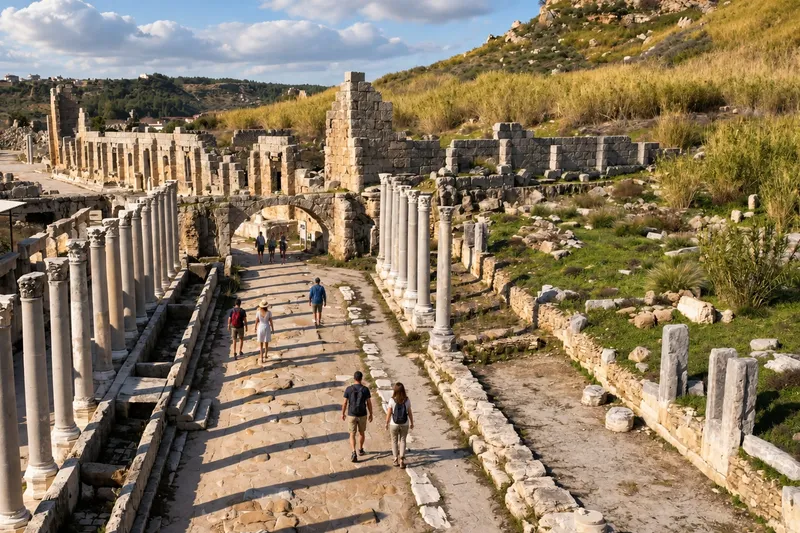
Regional dolmuş and coach journeys have their own destination boards, fares and payment arrangements. A city card balance does not cover an intercity ticket. For a coastal or archaeological outing, the day-trip route comparison separates destinations with straightforward road access from sites needing another transfer or a final uphill journey.
Which payment makes sense for a visit?
We recommend a separate Antalyakart for each adult making repeated connections, because the free-transfer entitlement is lost when one card is tapped immediately for another passenger. For a short stay built around a few direct rides, a contactless bank card avoids the plastic-card purchase and the task of using up a remaining balance.
Frequently asked questions
Do I need a passport or photograph for an ordinary Antalyakart?
The standard non-personalised Tam Kart is sold at machines and dealers without a personal-card application. Identity documents and a photograph belong to the application process for personalised cards.
Do children travel free on AntRay?
Children under seven travel free on AntRay when accompanied by a parent. This is the rail rule; it should not be applied to a separately ticketed regional coach journey.
Does being over 65 give a foreign visitor free city transport?
The 65 Yaş free-card category requires Turkish citizenship and an application. A foreign visitor’s age alone does not give access to that card.
More in Planning & Day Trips
-
 Planning & Day Trips
Antalya Airport to the city centre: tram, bus and transfers
T1A reaches central Antalya from T1; T2 needs a free shuttle. Compare buses to Lara and Konyaaltı, payment, late arrivals and the return trip. Updated -
 Planning & Day Trips
Where to stay in Antalya: Kaleiçi, Konyaaltı or Lara?
Kaleiçi for sights, Konyaaltı for a city beach, Lara–Kundu for resorts: compare sand, cliff access, family stays and arrival without a car. Updated -
 Planning & Day Trips
Day trips from Antalya: choose a route that fits your day
Pair Perge with Aspendos, choose Phaselis for the coast or Termessos for a mountain walk. Compare four outings and plan transport from Antalya. Updated