Hotel-transfer bookings require a pickup location and confirmation before the departure day. For a self-drive rafting booking, save the base’s Turkish name and exact location pin offline: the operator’s meeting point can be several kilometres from Oluk Bridge.
Plan the drive before the activities
Set navigation for Oluk Bridge (Oluk Köprüsü), in the Beşkonak/Karabük area of Manavgat, rather than the general national-park name. The park covers a large mountain area and a pin dropped in its centre may not lead to the rafting bases or the bridge. Download the Manavgat map offline before leaving the coast; reception becomes intermittent beyond Beşkonak.
- Take the D400 east from Antalya towards Serik and Manavgat.
- About five kilometres after Serik, turn north at the signs for Taşağıl, Beşkonak and Köprülü Canyon.
- Continue for approximately 37 kilometres through Taşağıl and Beşkonak. The final section follows the Köprüçay valley and becomes slower behind buses.
- Continue to your booked rafting base, or to Oluk Bridge for sightseeing.
The last ten kilometres have sharp bends and few useful overtaking places.
Public transport is awkward for this trip. Buses from Antalya serve Serik and Manavgat, but they do not solve the final mountain journey to the bridge and rafting bases. Rafting transfers cover the final journey from the coast to the base. Independent travellers should not assume that a taxi waiting in Manavgat will also be available at Oluk Bridge for the return; arrange both legs and the waiting time in advance.
What you actually pay
National-park admission and rafting are separate charges. At a charged entry unit, Antalya’s 2026 first-category domestic tariff is ≈ $1.9 (₺95) per pedestrian or ≈ $5.6 (₺285) for a car, pickup or light van, including its occupants within the registered passenger capacity. A family of two adults and two children, all Turkish citizens, entering together in one car pays ≈ $5.6 (₺285) in total under that tariff, with no additional pedestrian charges.
Foreign visitors have a different charging rule: site-specific admission is set at five to ten times the domestic pedestrian rate. When foreign visitors enter by car, the foreign per-person charge replaces the vehicle charge. The ≈ $5.6 (₺285) domestic family example therefore does not apply to a car carrying foreign tourists.
The park’s roads connect villages, rafting bases and widely separated sights; there is no single turnstile enclosing Oluk Bridge, Selge and Tazı Canyon. The tariffs above concern charged entry units, rather than a separate ticket for every bridge or viewpoint. Private rafting, restaurant and activity bills are separate.
| Domestic tariff, 2026 | Amount | Coverage |
|---|---|---|
| Pedestrian | ≈ $1.9 (₺95) | One visitor at a charged first-category entry unit |
| Student pedestrian with student ID | ≈ $0.94 (₺47.5) | 50% discount with student ID |
| Car, pickup or light van | ≈ $5.6 (₺285) | Vehicle and occupants within registered capacity |
Rafting is sold either with self-arrival at the base or with a round-trip hotel transfer. Combination packages add ziplining, quad or buggy circuits, canyoning or a Tazı viewpoint excursion. A headline activity price and a transfer-inclusive price cover different days; the booking total needs to include the pickup district and any park admission charged separately.
Nature Rafting’s river package includes a guide, helmet, life jacket, buffet lunch and personal accident insurance. Transfers, drinks, photographs, water shoes and waterproof phone cases cost extra. Photo packages are optional purchases after the trip.
One traveller who booked a canyon combination enjoyed rafting and ziplining but described the quad section as a slow queue and the jeep section as an open-top van ride. They also reported purchases of river shoes and dust protection at the base. Those are separate activities and equipment costs, rather than additional time on the river.
At Oluk Bridge, parking consists of small gravel bays and roadside spaces just beyond the bridge. Park where through traffic can still pass. Parking supplied by a rafting base is a private arrangement and should be confirmed with that base.
A rafting day, step by step
The standard commercial route covers 14 kilometres of the Köprüçay. Nature Rafting’s course is Grade 1–2, with an average water temperature of 8–10°C. That feels cold even when the air is hot, particularly during the first swim stop. The easy grading describes the rapids under normal operating conditions; it does not remove the need to follow the guide’s instructions.
At the base, staff issue a helmet, life jacket and paddle, then explain paddling commands, the seated position and what to do if someone falls into the water. Check that the vest closes properly and that the helmet does not tip over your eyes before leaving the equipment area. Non-swimmers should tell the guide before boarding rather than waiting until the first rapid.
Shared rafts normally carry a group with a guide. The river alternates calm stretches with short rapids and swimming breaks, and the actual time on the water is around two hours on the standard programme. Lunch and changing time explain why the complete base visit takes considerably longer. Independent swimming away from supervised stops is a different proposition: cold water, submerged rock and changing current make it unsuitable for a casual midday dip.
The main rafting season runs from May to October. In spring and late autumn, ask whether a wetsuit is supplied and whether the departure is confirmed for the current river conditions. After heavy rain, accept a postponement or cancellation. A guide’s decision based on water level is more useful than a voucher’s promise of a daily departure.
Pack once: five things
- Secure water shoes, trainers or sandals with a heel strap. Flip-flops come off and wet limestone is slippery.
- Swimwear and a quick-drying synthetic shirt for the river; cotton stays wet longer. Keep a complete dry change at the base for the return journey.
- A towel, sunscreen and sunglasses with a retaining strap.
- A waterproof phone case or an action camera with a secure chest or helmet mount. Leave selfie sticks and glass containers at the base.
- Drinking water and a small dry bag for essential medication; keep jewellery and other valuables elsewhere.
Rafting bases generally provide changing cabins and somewhere to leave the dry bag, either in basic lockers or on their transport. Storage arrangements vary, so leave passports and anything you cannot replace at your accommodation. Independent hikers do not have a central public luggage room at Oluk Bridge and should keep belongings out of sight in the car.
Oluk Bridge without a rafting booking
The Roman stone bridge is the best first stop for an independent visit. Its arch frames the narrow gorge, and the river immediately below gives a clearer sense of the canyon than the restaurant platforms downstream. Walk across slowly: the surface is uneven, the deck is narrow and vehicles still use it. There is no separate pedestrian bridge beside it.
Arriving between 08:30 and 09:30 leaves time at the bridge before the late-morning excursion traffic. A stop of 30–45 minutes is enough for the bridge and riverbank unless you plan a longer walk. Stay off wet rock at the water’s edge and keep the roadway clear for passing vehicles.
Büğrüm Bridge is the second Roman bridge in the park, on the historic route towards Selge. It crosses the Kocadere tributary, on a separate approach from Oluk Bridge. The St Paul Trail also passes through this mountain landscape as a long-distance route. Walking sections of the St Paul Trail requires an offline route, water and a return plan.
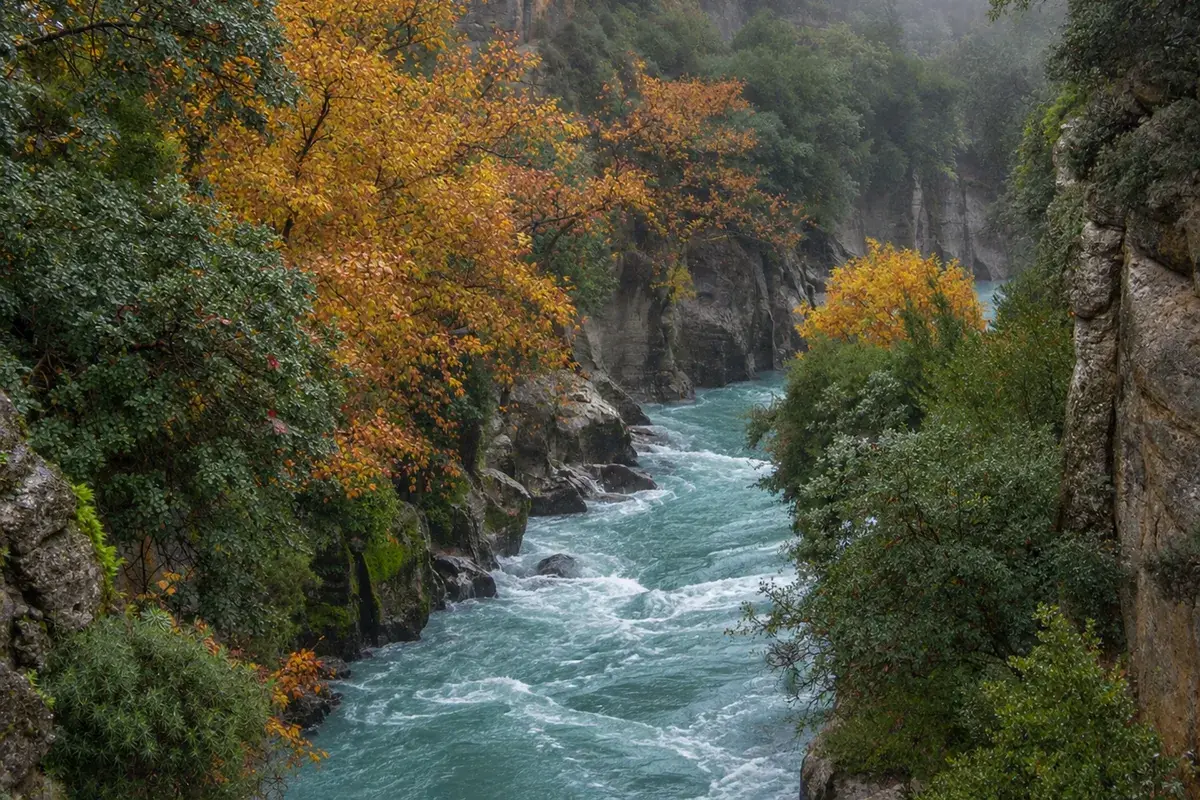
The main Köprülü gorge runs for 14 kilometres and its walls rise to about 100 metres. Claims of a 400-metre depth usually confuse it with the much higher viewpoints around Tazı Canyon.
Selge, Adam Kayalar and Tazı Canyon
Continue uphill from Oluk Bridge for approximately 13 kilometres on the winding road to Selge, at Altınkaya village. The remains occupy a broad mountainside and include a theatre, agora, stadium and other structures. Allow time for rough stone underfoot and very little shade. This is an archaeological landscape rather than a single fenced theatre building.
Adam Kayalar stands on the approach to Selge. Its conglomerate pinnacles resemble rows of standing figures, which explains both the Turkish name, meaning “Man Rocks,” and the English label “Devil’s Rocks.” Those names refer to the same formations. Stop only in a safe pull-off; the road bends do not provide convenient parking at every viewpoint.
Tazı Canyon requires a farther mountain drive towards Gaziler. Its viewing area looks into cliffs dropping around 400 metres, so it deserves a separate block of time and careful attention at the edge. Keep children close and stay behind any barrier. Wind, loose gravel and an unfenced photograph are a poor combination.
For the upper sights, allow 30 minutes from Oluk Bridge to Selge without sightseeing stops, 30 minutes from Oluk Bridge towards Tazı Canyon, and one hour between Selge and Tazı via the bridge junction. These are driving allowances on winding roads, not a timetable; viewpoint access and walking add time. Selge and Tazı are separate branches of the day’s drive, so visiting both involves returning towards the junction. A full rafting programme leaves little daylight for this circuit.
Two workable ways to spend the day
With a rafting reservation: go directly to the base for the voucher’s meeting time. The briefing, descent, river stops, changing and lunch occupy the central part of the day. A hotel-transfer booking follows the group’s return schedule; an Oluk Bridge stop needs to be included in that itinerary.
Without rafting: start at Oluk Bridge, continue to Büğrüm Bridge if time allows, and then drive up through Adam Kayalar to Selge. Eat before the final Tazı excursion and leave the viewpoints early enough to descend in daylight. Five to seven hours is more realistic for this version than a quick bridge visit.
Roman-site travellers based on the coast may prefer a separate cultural day. Aspendos Ancient Theatre is a much shorter excursion from Antalya, while Perge Ancient City lies close to Antalya itself. For a shorter nature excursion with a canyon walk and optional water activities, Göynük Canyon lies on the Kemer side of Antalya.
Children, health and limited mobility
Nature Rafting sets a minimum age of five for its rafting tour. Other operators set their own limits, so the chosen operator’s participation rule must be checked before booking a child. Children need a properly fitted vest and an adult who can keep them attentive during the briefing.
Nature Rafting does not recommend its tour for pregnant travellers or people with severe back, heart or joint problems. Canyoning has different demands from rafting and may carry a higher age limit. Ask specifically about climbing, jumping and swimming sections before choosing that upgrade.
Oluk Bridge and the upper ruins are difficult with wheels. The bridge has uneven ancient stone and no useful stroller width, while Selge and the river paths include gravel, steps and sloping rock. A child carrier is more practical away from the restaurant terraces. Visitors with limited mobility can still see the river from accessible areas near the road and larger bases, but should confirm parking and step-free access with the chosen venue before travelling.
Toilets and changing facilities are concentrated at rafting bases and larger restaurants. They become scarce once you continue towards the upper bridges and ruins. Carry water for the mountain section; do not rely on finding a shop open at every stop.
Food and other base-camp practicalities
Nature Rafting’s buffet lunch includes grilled chicken, rice, pasta, salad and seasonal fruit; drinks cost extra. Independent visitors will find trout and gözleme at restaurants around Beşkonak and along the river. Ask whether fish is priced by portion or weight and check the drinks bill before ordering for a group.
Small stalls sell snacks, local products and basic river gear. Share the base name and expected return time with someone at your hotel before entering the park, especially when travelling independently.
The canyon and its Roman road
For centuries, the steep cliffs of Köprülü Canyon served as a natural barrier between the Mediterranean coast of Pamphylia and inland Pisidia. During the Roman period, this pass became a route linking the coast with Selge. Stone bridges and road sections carried movement through a valley that would otherwise have forced a long detour across the mountains.
Oluk Bridge, also called the Eurymedon Bridge, is the best-known surviving structure on that route. Built in the second century AD, its single stone arch spans a narrow point above the Köprüçay. Büğrüm Bridge formed part of the same mountain approach. Oluk remains a road crossing as well as a historic landmark.
The Köprüçay was known in antiquity as the Eurymedon. The famous ancient battle associated with that name took place near the river’s mouth on the coast, not inside the gorge. Selge’s position above the valley illustrates why the crossing mattered for communication between Pisidia and Pamphylia.
The protected area was declared a national park on 12 December 1973 and now covers 47,473 hectares across Antalya and Isparta provinces. Its natural cypress forests, cedar and black pine stands surround Selge, Oluk and Büğrüm bridges, Tazı Canyon and Adam Kayalar. A dedicated Köprülü Canyon National Park Directorate was established under a ministerial decision dated 24 July 2026, bringing visitor management and monitoring under a park-level administration.
When to change the plan
Heavy rain, an unconfirmed departure or a child who does not meet the operator’s conditions are reasons to skip the river portion. The bridge and Selge can still make a worthwhile drive in suitable road weather, but Tazı’s exposed viewpoints are unrewarding in low cloud and unsafe to approach casually in high wind.
We recommend a river-only rafting day for a first rafting visit, because the transfers, descent and lunch already fill the schedule. For ruins and high viewpoints, use a separate day by car or a sightseeing tour that includes Selge and Tazı as stops.
Frequently asked questions
Does the admission receipt allow re-entry?
Yes. A receipt for protected-area admission covers repeat entry to the same area on the same calendar day. Keep it for the return through an entry unit.
What is the difficulty level and age limit for rafting?
Nature Rafting classifies its 14-kilometre run as Grade 1–2 and sets a minimum age of five. Other operators have their own age limits; check the chosen operator’s participation rule before booking a child.
Is canyoning the same activity as rafting?
No. Rafting uses an inflatable boat. Canyoning involves travelling through a gorge on foot and in the water, with swimming, climbing or jumping depending on the route. A combination booking needs separate participation conditions for that section.
Do students get discounted admission?
Student pedestrians with student ID receive a 50% reduction under the domestic admission rules. The reduction does not apply to accompanying parents or replace the car tariff.
More in Nature & Outdoors
-
 Nature & Outdoors
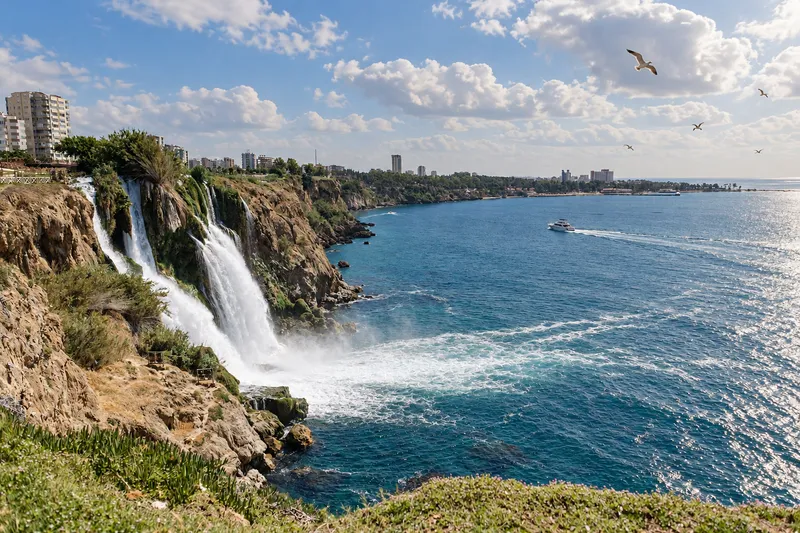
Düden Waterfalls
Plan your visit to Düden Waterfalls in Antalya. Check ticket prices, opening hours, cave access details, and tips to avoid crowds. Updated -
 Nature & Outdoors
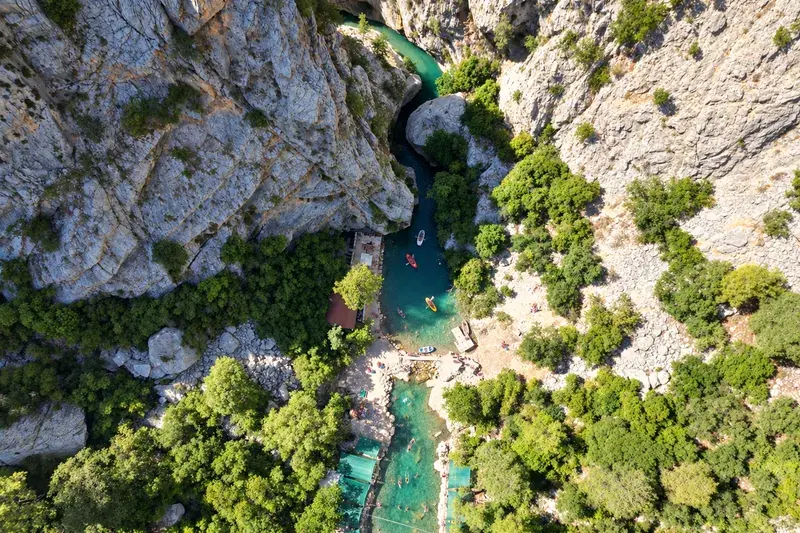
Göynük Canyon
Walk to the pools at Göynük Canyon, take the ≈ $33 (€30) boat or book the ≈ $27 (€25) Safari. Allow 30–40 minutes uphill and take KA07 from Antalya Otogar. Updated -
 Nature & Outdoors
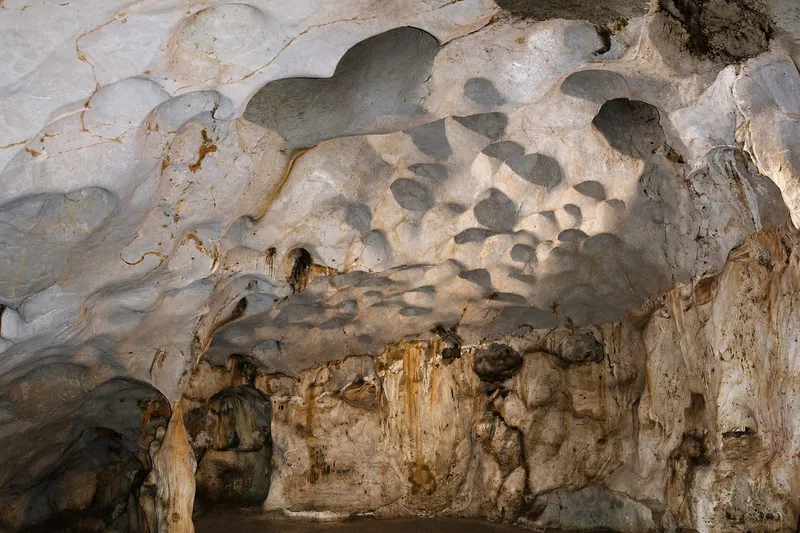
Karain Cave
Explore Karain Cave, Turkey's largest prehistoric site near Antalya. Discover ticket prices, opening hours, and what to expect on the climb. Updated